
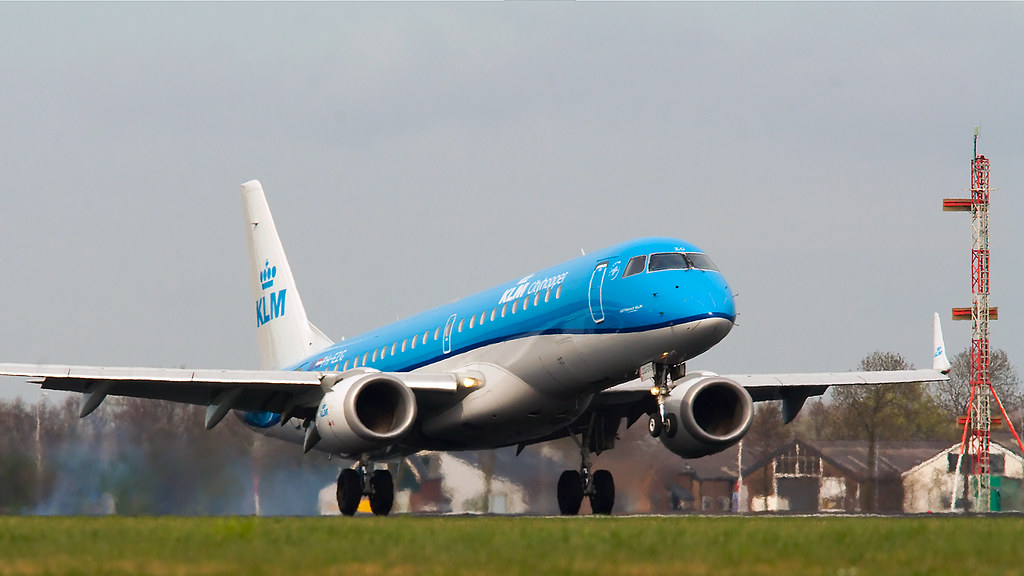
The Embraer E‑Jet family is one of the most successful regional jet programs ever launched, serving airlines across the globe with a blend of efficiency, comfort, and versatility. Designed and manufactured in São José dos Campos, Brazil, the E‑Jets have become a cornerstone of short‑to‑medium‑haul operations for both major carriers and regional operators.
Embraer originally entered the commercial aviation market with turboprop aircraft, but the launch of the E‑Jet program marked a major turning point. The clean‑sheet design offered airlines a modern, fuel‑efficient jet with a comfortable cabin, advanced avionics, and operating economics that challenged the dominance of Bombardier’s CRJ series.
Today, the E‑Jet family — including the E170, E175, E190, and E195 — continues to be a favourite among passengers and airlines alike. With the introduction of the next‑generation E2 series, Embraer has further refined the platform, delivering improved performance, lower fuel burn, and updated cabin features.
At a Glance
| Model Range | E170 / E175 / E190 / E195 |
|---|---|
| Manufacturer | Embraer, São José dos Campos, Brazil |
| First Flight | 19 February 2002 (E170) |
| Entry Into Service | April 2004 (US Airways) |
| Passenger Capacity | 66–124 seats depending on variant |
| Range | Up to 4,488 km (2,420 nm) |
| Engines | GE CF34‑8E / CF34‑10E |
| Cruise Speed | Mach 0.78 (450 knots) |
| Total Orders (Q2 2022) | 2,000 |
| Total Delivered (Q2 2022) | 1,688 |

Development Timeline
The Embraer E‑Jet program evolved rapidly from its initial concept in the late 1990s to full commercial service in the mid‑2000s. Below is a detailed timeline showing the major milestones in the development of this highly successful aircraft family.
| Date | Milestone |
|---|---|
| 1997 | Embraer announces it is studying a new 70‑seat jetliner called the EMB‑170. |
| February 1999 | Plans to incorporate ERJ components are abandoned in favour of an all‑new design. |
| June 1999 | The E‑Jet program is officially launched at the Paris Air Show. |
| July 2000 | Production of the prototype E‑170 begins. |
| 29 October 2001 | Prototype E‑170‑001 (PP‑XJE) is rolled out. |
| 19 February 2002 | First flight of E‑170‑001. |
| May 2002 | First public display of the E‑170 at the Regional Airline Association convention. |
| 2002 | Full production begins at a new purpose‑built factory. |
| June 2003 | The stretched E‑175 makes its first flight. |
| February 2004 | Brazilian, U.S., and European certification granted for the E‑170. |
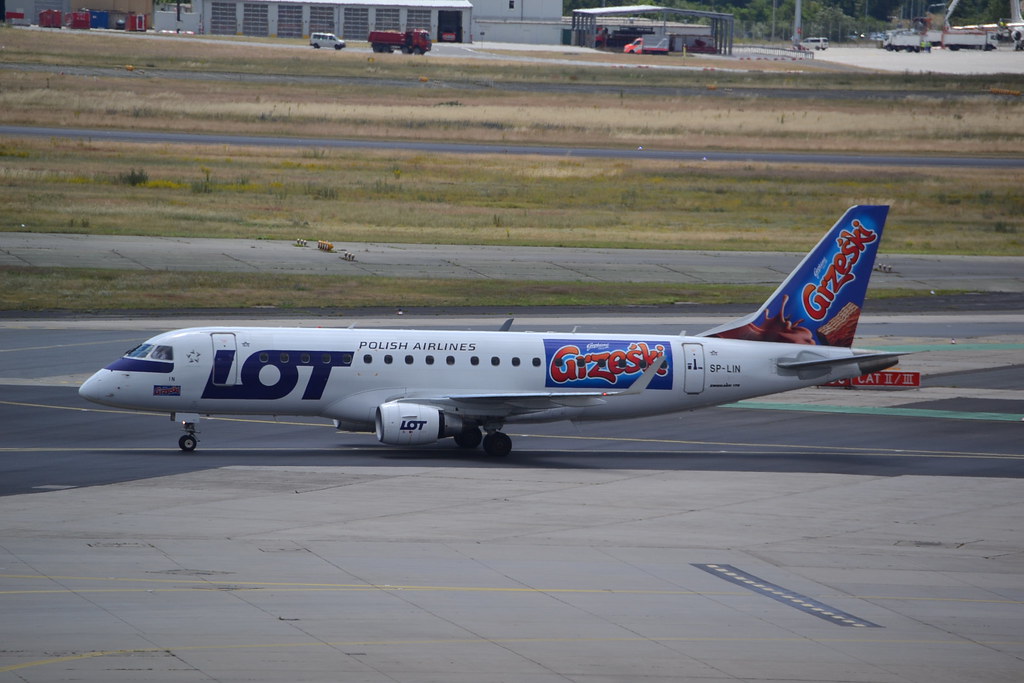
| March 2004 | LOT Polish Airlines becomes the launch customer. |
| 12 March 2004 | First flight of the E‑190 (PP‑XMA). |
| 04 April 2004 | US Airways introduces the E‑170 into service. |
| 7 December 2004 | First flight of the E‑195 (PP‑XMJ). |
| July 2005 | Air Canada introduces the E‑175 into service. |
| 02 May 2006 | Executive jet version ERJ‑190‑100 ECJ announced. |
| 2008 | 400th E‑Jet delivered (Republic Airlines). |
| 06 November 2008 | Longest E‑Jet flight: Anchorage to Buffalo (4,989 km) under charter for Sarah Palin. |
| 07 January 2009 | Certification received for ERJ‑190‑100 ECJ. |
| September 2009 | 600th E‑Jet delivered (LOT Polish Airlines). |
| November 2011 | Embraer announces development of the E‑Jet E2 family. |
| 11 April 2012 | Prototype E‑170‑001 makes its final flight before being broken up. |
| 10 October 2012 | 900th E‑Jet delivered (Kenya Airways). |
| 13 September 2013 | 1,000th E‑Jet delivered (Republic Airlines). |
| 25 February 2016 | First E‑Jet E2 (E‑190‑E2) rolls out. |
| 23 May 2016 | E‑190‑E2 maiden flight: 3 hours 20 minutes, climbing to 41,000 ft. |
| 28 February 2018 | E‑190‑E2 receives certification from FAA, ANAC, and EASA. |
| 04 April 2018 | First E‑190‑E2 delivered to Widerøe. |
| 24 April 2018 | Widerøe begins E‑190‑E2 service between Bergen and Tromsø. |
History
The Embraer E‑Jet program emerged during a period of rapid change in regional aviation. Airlines were seeking aircraft that could bridge the gap between small regional jets and larger narrow‑body airliners, offering both comfort and efficiency. Embraer recognised this opportunity and began developing a clean‑sheet design that would become the E‑Jet family.
The first member of the family, the E‑170, took to the skies in February 2002. It featured a modern flight deck, advanced fly‑by‑wire controls, and a comfortable 2‑2 cabin layout that immediately set it apart from competing regional jets. The E‑175, E‑190, and E‑195 followed soon after, each offering increased seating capacity and range.
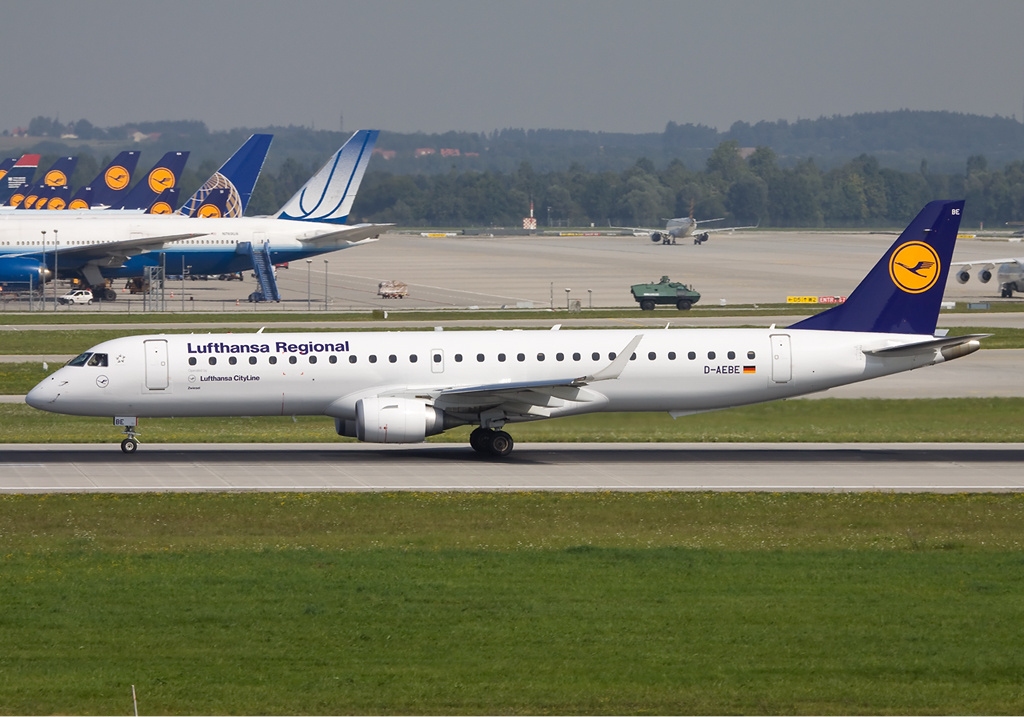
The E‑Jets quickly gained traction with airlines around the world. US Airways became the first operator to introduce the E‑170 into service in April 2004, followed by Air Canada with the E‑175. LOT Polish Airlines, JetBlue, KLM, and many others soon adopted the type, praising its reliability, passenger comfort, and operating economics.
By the late 2000s, the E‑Jet family had firmly established itself as one of the most successful regional jet programs ever launched. Embraer continued to refine the design, culminating in the introduction of the E2 series — a new generation featuring improved aerodynamics, new engines, and updated cabin features.
Today, the E‑Jets remain a cornerstone of regional and short‑haul operations worldwide. Their blend of efficiency, comfort, and versatility has ensured their place as one of the most influential aircraft families in modern aviation history.
Specifications

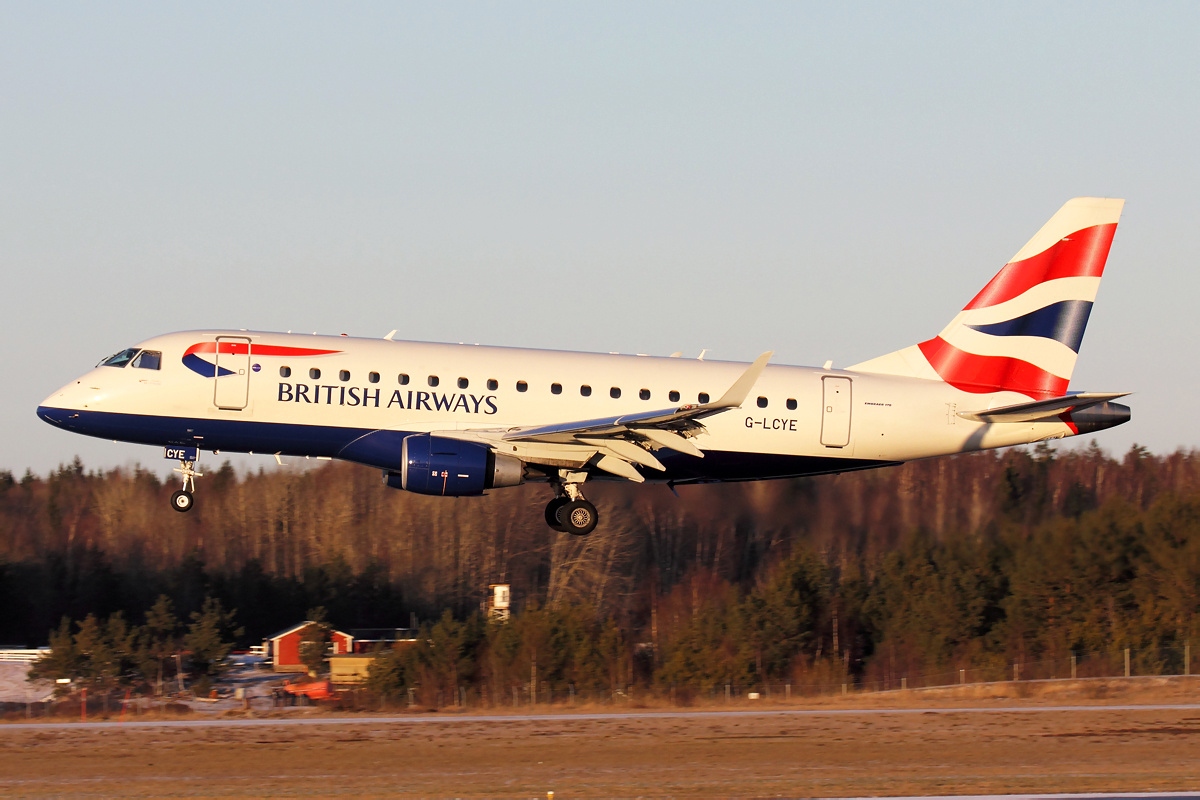
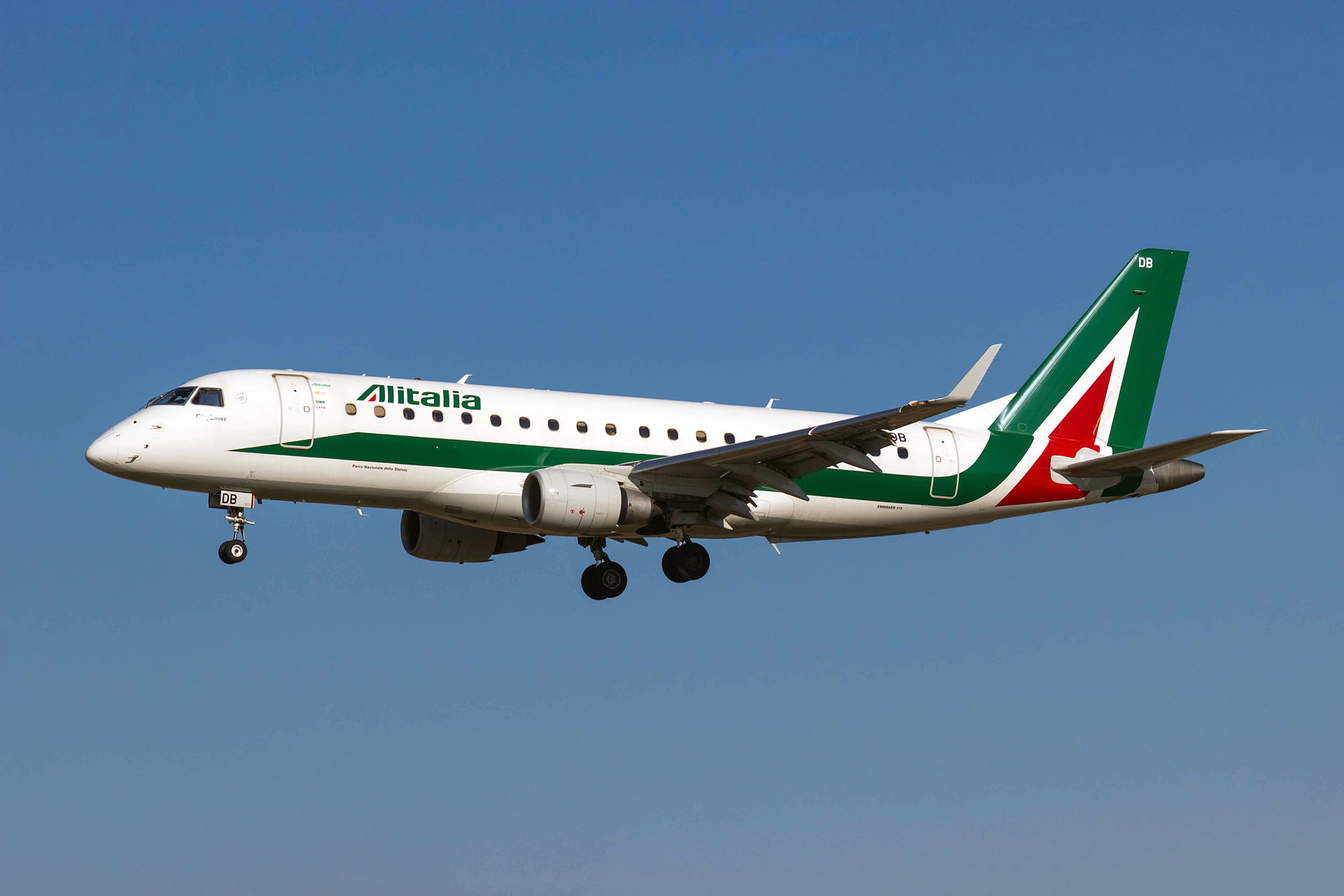
The Embraer E‑Jet family consists of four main variants — the E170, E175, E190, and E195 — each designed to meet different seating and range requirements. All models share a common fuselage cross‑section, flight deck layout, and systems architecture, allowing airlines to benefit from reduced training and maintenance costs.
| ERJ 170 | ERJ 175 | ERJ 190 | ERJ 195 | |
|---|---|---|---|---|
| Flight Crew | 2 | |||
| Range STD = Standard LR = Long Range AR = Advanced Range E2 = New E2 variants |
STD: 3,334 km (1,800 nm) LR: 3,889 km (2,100 nm) AR: 3,892 km (2,102 nm) |
STD: 3,334 km (1,800 nm) LR: 3,889 km (2,100 nm) AR: 3,706 km (2,001 nm) E2: 3,735 km (2,017 nm) |
STD:3,334 km (1,800 nm) LR: 4,260 km (2,300 nm) AR: 4,448 km (2,402 nm) E2: 5,280 km (2,850 nm) |
STD: 2,593 km (1,400 nm) LR: 3,334 km (1,800 nm) AR: 4,077 km (2,201 nm) E2: 4,917 km (2,655 nm) |
| Seating (max) | 80 | 88 E2 90 |
114 E2 114 |
122 E2 146 |
| Competes against | Bombardier CRJ-700 | Bombardier CRJ-900 / DHC Q400 | Bombardier CRJ-1000 / Airbus A220 | Boeing 717-200 / Boeing 737-600 / Airbus A318 |
| Length | 29.90 m ( 98 ft 1 in) | 31.68 m (103 ft 11 in) E2 32.40 m (106 ft 4 in) |
36.24 m (118 ft 11 in) E2 36.25 m (118 ft 11 in) |
38.65 m (126 ft 10 in) E2 41.51 m (136 ft 2 in) |
| Wing span | 26.00 m (85 ft 4 in) | 26.00 m (85 ft 4 in) E2 31.00 m (101 ft 9 in |
28.72 m (94 ft 3 in) E2 33.72 m (110 ft 6 in |
|
| Height | 9.67 m (32 ft 4 in) | 9.67 m (32 ft 4 in) E2 9.98 m (32 ft 8 in |
10.28 m (34 ft 7 in) E2 10.96 m (36 ft 0 in |
10.28 m (34 ft 7 in) E2 10.91 m (35 ft 9 in |
| Fuselage Width (Exterior) | 3.01 m (9 ft 11 in) | |||
| Cabin Width (interior) | 2.74 m (9 ft 0 in) | |||
| Fuselage Height (Exterior) | 3.35 m (11 ft 0 in) | |||
| Cabin Height (interior) | 2.00 m (6 ft 7 in) | |||
| Speed | Mach 0.82 (890 kph (481 kts) | Mach 0.82 (890 kph (481 kts) E2 Max: Mach 0.82 (473 kn; 876 km/h), Typical:Mach 0.78 (450 kn; 833 km/h) |
||
| Empty Weight | 21,140 kg (46,610 lb) | 21,810 kg (48,080 lb) | 28,080 kg (61,910 lb) E2 33,000 kg (73,000 lb) |
28,970 kg (63,870 lb) E2 35,700 kg (78,705 lb) |
| Maximum Take off Weight STD = Standard LR = Long Range AR = Advanced Range E2 = New E2 variants |
STD:35,990 kg (79,340 lb) LR: 37,200 kg (82,000 lb) AR: 38,600 kg (85,100 lb) |
STD: 37,500 kg (82,700 lb) LR: 38,790 kg (85,520 lb) AR: 40,370 kg (89,000 lb) E2: 44,800 kg (98,800 lb) |
STD: 47,790 kg (105,360 lb) LR: 50,300 kg (110,900 lb) AR: 56,400 kg (124,300 lb) E2: 44,800 kg (98,800 lb) |
STD: 48,790 kg (107,560 lb) LR: 50,790 kg (111,970 lb) AR: 52,290 kg (115,280 lb) E2: 61,500 kg (135,600 lb) |
| Maximum Payload Weight STD = Standard LR = Long Range AR = Advanced Range |
STD: 9,100 kg (20,100 lb) LR: 9,100 kg (20,100 lb) AR: 9,840 kg (21,690 lb) |
STD: 10,080 kg (22,220 lb LR: 10,080 kg (22,220 lb) AR: 10,360 kg (22,840 lb) |
13,080 kg (28,840 lb) | 13,650 kg (30,090 lb) |
| Takeoff Run at MTOW (sea level at ISA) E2 = New E2 variants |
1,644 m (5,394 ft) | 2,244 m (7,362 ft) E2 1,800 m (5,900 ft) |
2,056 m (6,745 ft) E2 1,450 m (4,760 ft) |
2,179 m (7,149 ft) E2 1,970 m (6,460 ft) |
| Engines APR Thrust=Automatic Performance Reserve* |
2× GE CF34-8E turbofans 61.4 kN (13,800 lbf) thrust each 63.2 kN (14,200 lbf) APR thrust each |
2× GE CF34-8E turbofans 61.4 kN (13,800 lbf) thrust each 63.2 kN (14,200 lbf) APR thrust each E2 2 x Pratt & Whitney PW1715G Thrust – 67 kN (15,000 lbf) |
2× GE CF34-10E turbofans 82.3 kN (18,500 lbf) thrust each 89 kN (20,000 lbf) APR thrust each E2 2 x Pratt & Whitney PW1919G/21G/22G/23G Thrust – 85-102 kN (19,000-23,000 lbf) |
|
| Automatic Power Reserve is a setting that can be invoked in the case of one engine flaming out to allow the good engine to pick up the load. | ||||
Assembly
The Embraer E‑Jets are assembled at Embraer’s main production facility in São José dos Campos, Brazil. This modern complex houses the final assembly lines for both the original E‑Jet family and the newer E2 series. The facility is designed for high‑efficiency production, with a streamlined workflow that moves aircraft from initial fuselage assembly through to systems installation, interior fit‑out, and final testing.
Major components such as wings, fuselage sections, and empennage assemblies arrive from Embraer’s network of suppliers and partner facilities. These components are then integrated on the main assembly line, where technicians install avionics, wiring harnesses, hydraulic systems, landing gear, and the GE CF34 engines.
Once structural assembly is complete, the aircraft moves to the interior installation stage. Here, the cabin is fitted with seats, overhead bins, galleys, lavatories, and lighting systems. The flight deck receives its full avionics suite, including the advanced fly‑by‑wire controls and multi‑function displays that define the E‑Jet family.
The final stage of production includes extensive ground testing, followed by a series of flight tests conducted by Embraer’s test pilots. Only after passing all certification and quality checks is the aircraft delivered to the customer. Embraer’s efficient assembly process has been a key factor in the E‑Jet program’s success, enabling rapid production rates and consistent quality across all variants.
Cabin Interior
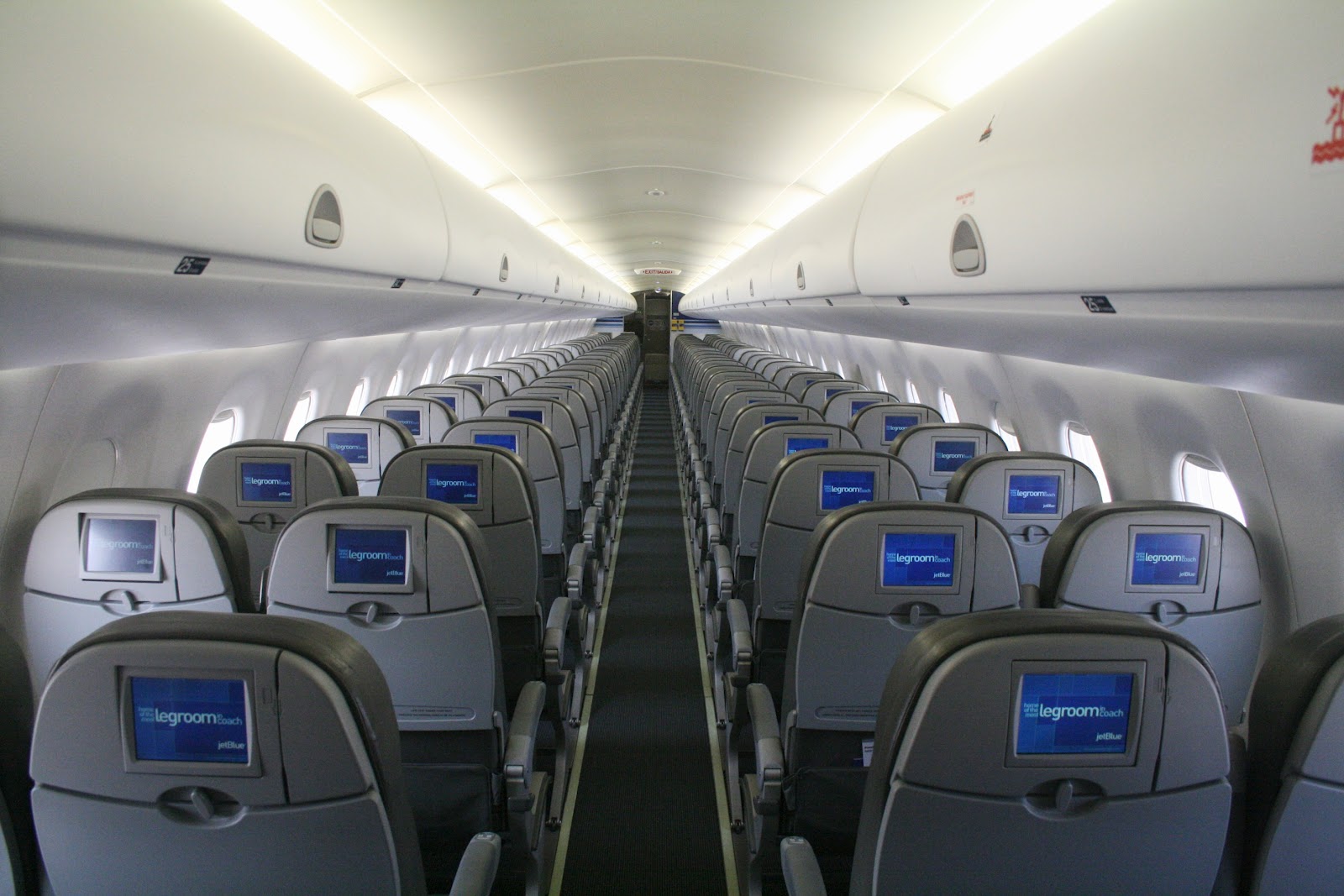
One of the defining features of the Embraer E‑Jet family is its comfortable and passenger‑friendly cabin. Unlike many regional jets that use a narrow 2‑1 seating layout, the E‑Jets feature a spacious 2‑2 configuration with no middle seats. This immediately gives the aircraft a more “mainline” feel, making it popular with both airlines and travellers.
The cabin is designed around Embraer’s “double‑bubble” fuselage cross‑section, which provides generous headroom and shoulder space. Overhead bins are sized to accommodate standard carry‑on luggage, a major advantage over competing regional aircraft. Lighting, trim, and seating options vary by airline, but the overall cabin environment is consistently modern and comfortable.
Noise levels inside the E‑Jets are noticeably lower than earlier regional jets, thanks to improved engine mounting, aerodynamic refinements, and advanced cabin insulation. Passengers often comment on the quiet ride, smooth handling, and the feeling of flying on a larger aircraft despite the E‑Jets’ compact size.
The flight deck is equally modern, featuring a full glass cockpit with four large multi‑function displays, fly‑by‑wire controls, and an intuitive layout that reduces pilot workload. The cockpit commonality across the E‑Jet family allows airlines to streamline training and improve operational flexibility.
Overall, the E‑Jet cabin interior has played a major role in the aircraft’s success. Its combination of comfort, quietness, and thoughtful design has helped redefine what passengers expect from regional air travel.
Orders & Deliveries
While the historical Orders & Deliveries table below reflects the full customer-by-customer breakdown published during the E‑Jet program’s earlier years, Embraer’s most recent commercial data shows the family continuing to perform strongly in 2026. The company reported a record commercial backlog of US$15 billion, driven by major new orders including Finnair’s commitment for up to 46 E195‑E2s. Deliveries have also accelerated, with 10 commercial E‑Jets handed over in Q1 2026 and a further 20 aircraft delivered in Q2 — the strongest second quarter in sixteen years. Year‑to‑date, Embraer has delivered 30 commercial E‑Jets and is tracking toward its full‑year guidance of 80–85 aircraft, underscoring the continued relevance and demand for both the E1 and E2 families.

The Embraer E‑Jet family has achieved remarkable commercial success since its introduction, with airlines around the world embracing the aircraft for its efficiency, comfort, and versatility. The following table presents the complete orders and deliveries data you supplied, covering all customers from launch through Q2 2022.
This table is rebuilt exactly to ModernAirliners standards, preserving your alternating row colours and full dataset. Total Orders: 2,000 Total Deliveries: 1,688
| Customers | Ordered | Delivered |
|---|---|---|
| Conviasa | 16 | 16 |
| E190‑E1 | 16 | 16 |
| Copa | 15 | 15 |
| E190‑E1 | 15 | 15 |
| Dniproavia | 5 | 5 |
| E190‑E1 | 5 | 5 |
| ECC Leasing | 8 | 8 |
| E170‑E1 | 6 | 6 |
| E175‑E1 | 1 | 1 |
| E190‑E1 | 1 | 1 |
| Egypt Air | 12 | 12 |
| E170‑E1 | 12 | 12 |
| Finnair | 22 | 22 |
| E170‑E1 | 10 | 10 |
| E190‑E1 | 12 | 12 |
| Flybe | 25 | 25 |
| E175‑E1 | 11 | 11 |
| E195‑E1 | 14 | 14 |
| Fuji Dream | 2 | 2 |
| E175‑E1 | 2 | 2 |
| GECAS | 53 | 53 |
| E170‑E1 | 9 | 9 |
| E175‑E1 | 5 | 5 |
| E190‑E1 | 27 | 27 |
| E195‑E1 | 12 | 12 |
| Globalia | 12 | 12 |
| E195‑E1 | 12 | 12 |
| Guizhou / Colorful | 9 | 9 |
| E190‑E1 | 9 | 9 |
| Hainan | 70 | 70 |
| E190‑E1 | 50 | 50 |
| E195‑E1 | 20 | 20 |
| Hebei | 6 | 6 |
| E190‑E1 | 6 | 6 |
| Helvetic | 12 | 12 |
| E190‑E2 | 8 | 8 |
| E195‑E2 | 4 | 4 |
| Horizon Air / Alaska | 50 | 30 |
| E175‑E1 | 50 | 30 |
| ICBC | 10 | 5 |
| E195‑E2 | 10 | 5 |
| JAL | 32 | 32 |
| E170‑E1 | 18 | 18 |
| E190‑E1 | 14 | 14 |
| JetBlue | 64 | 64 |
| E190‑E1 | 64 | 64 |
| Kenya Airways | 10 | 10 |
| E190‑E1 | 10 | 10 |
| KLM | 43 | 43 |
| E175‑E1 | 17 | 17 |
| E190‑E1 | 26 | 26 |
| KunPeng | 5 | 5 |
| E190‑E1 | 5 | 5 |
| LAM | 2 | 2 |
| E190‑E1 | 2 | 2 |
| LOT Polish Airlines | 30 | 30 |
| E170‑E1 | 6 | 6 |
| E175‑E1 | 12 | 12 |
| E190‑E1 | 12 | 12 |
| Lufthansa CityLine | 30 | 30 |
| E190‑E1 | 30 | 30 |
| Montenegro | 1 | 1 |
| E195‑E1 | 1 | 1 |
| NAC / Aldus | 27 | 27 |
| E175‑E1 | 2 | 2 |
| E190‑E1 | 21 | 21 |
| E195‑E1 | 4 | 4 |
| NAC / Jetscape | 16 | 16 |
| E170‑E1 | 1 | 1 |
| E175‑E1 | 4 | 4 |
| E190‑E1 | 9 | 9 |
| E195‑E1 | 2 | 2 |
| NAS Air | 3 | 3 |
| E190‑E1 | 3 | 3 |
| NIKI | 7 | 7 |
| E190‑E1 | 7 | 7 |
| Northwest | 36 | 36 |
| E175‑E1 | 36 | 36 |
| Oman Air | 5 | 5 |
| E175‑E1 | 5 | 5 |
| Overland Airways | 3 | 0 |
| E175‑E1 | 3 | 0 |
| Petro Air | 2 | 2 |
| E170‑E1 | 2 | 2 |
| Porter | 30 | 0 |
| E195‑E2 | 30 | 0 |
| Regional | 20 | 20 |
| E170‑E1 | 10 | 10 |
| E190‑E1 | 10 | 10 |
| Republic | 2 | 2 |
| E190‑E1 | 2 | 2 |
| Republic Airlines | 48 | 48 |
| E170‑E1 | 48 | 48 |
| Republic Airways | 223 | 123 |
| E175‑E1 | 223 | 123 |
| Royal Jordanian | 4 | 4 |
| E175‑E1 | 2 | 2 |
| E195‑E1 | 2 | 2 |
| Satena | 1 | 1 |
| E170‑E1 | 1 | 1 |
| Saudi Arabian Airlines | 15 | 15 |
| E170‑E1 | 15 | 15 |
| Sirte Oil | 1 | 1 |
| E170‑E1 | 1 | 1 |
| SkyWest | 209 | 192 |
| E175‑E1 | 209 | 192 |
| Suzuyo | 11 | 11 |
| E175‑E1 | 11 | 11 |
| Suzuyo | 2 | 2 |
| E170‑E1 | 2 | 2 |
| TACA | 11 | 11 |
| E190‑E1 | 11 | 11 |
| TAME | 5 | 5 |
| E170‑E1 | 2 | 2 |
| E190‑E1 | 3 | 3 |
| TRIP | 9 | 9 |
| E175‑E1 | 5 | 5 |
| E190‑E1 | 4 | 4 |
| TUI | 3 | 3 |
| E190‑E1 | 3 | 3 |
| Ukraine International | 5 | 5 |
| E190‑E1 | 5 | 5 |
| US Airways | 25 | 25 |
| E170‑E1 | 25 | 25 |
| Virgin Australia | 6 | 6 |
| E190‑E1 | 6 | 6 |
| Virgin Nigeria | 7 | 7 |
| E170‑E1 | 7 | 7 |
| Widerøe | 3 | 3 |
| E190‑E2 | 3 | 3 |
| Xiamen Airlines | 10 | 10 |
| E190‑E1 | 10 | 10 |
Legacy
Since its introduction in the early 2000s, the Embraer E‑Jet family has reshaped regional and short‑haul aviation. At a time when airlines were seeking aircraft that could bridge the gap between small regional jets and larger narrow‑bodies, the E‑Jets delivered a modern, comfortable, and efficient solution that quickly gained global acceptance. Their 2‑2 cabin layout, advanced avionics, and strong operating economics helped set new standards for passenger experience and airline flexibility.
Over two decades later, the E‑Jets continue to play a central role in fleets around the world. The family’s enduring popularity is reflected in its substantial historical order book, as well as Embraer’s ongoing investment in the next‑generation E2 series. With a record commercial backlog reported in 2026 and major new commitments such as Finnair’s order for up to 46 E195‑E2s, the program remains one of the most successful regional jet platforms ever launched.
The E2 series builds on the strengths of the original E‑Jets with improved aerodynamics, new engines, and updated cabin features, ensuring the aircraft remain competitive in an evolving market. As airlines continue to prioritise fuel efficiency, passenger comfort, and operational versatility, the E‑Jets — both E1 and E2 — are well positioned to remain a cornerstone of regional aviation for many years to come.