
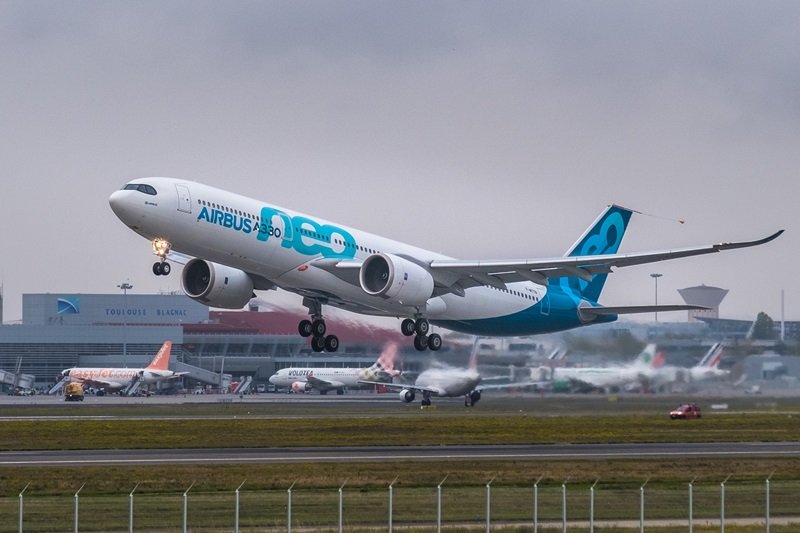
Airbus A320 Family
Launched in the 1980s as Airbus’s answer to the Boeing 737, the A320 introduced digital fly‑by‑wire controls, a modern two‑crew glass cockpit, and a flexible family concept
that would grow into the A318, A319, A320, A321 and later the re‑engined neo variants.
From short domestic hops to longer regional routes, the A320 family has become a familiar sight at airports around the world. It offers airlines a blend of efficiency,
commonality, and passenger comfort that has kept it in continuous production and development for decades. Today, the A320 family forms the backbone of many fleets,
from low‑cost carriers to full‑service airlines.

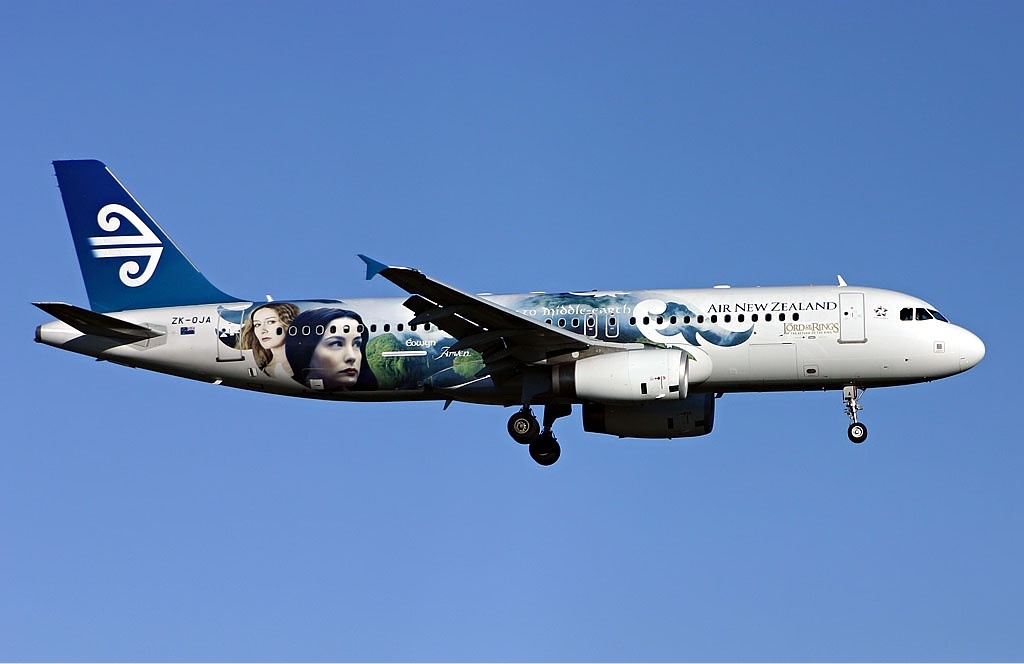
Origins and Early Development
In the late 1970s and early 1980s, Airbus recognised that to compete seriously with Boeing, it needed a modern narrow‑body aircraft to sit alongside its wide‑body A300
and A310. The result was a new single‑aisle programme that would eventually become the A320. Airbus explored several design studies, looking at capacity, range, and
technology, and ultimately decided to leap ahead of its competitors by adopting advanced digital flight controls and a highly automated cockpit.
The A320 programme was officially launched in March 1984, with initial orders from several European airlines. Airbus positioned the aircraft as a technologically
advanced, fuel‑efficient alternative to the 737 and other contemporaries, with a focus on lower operating costs and a high degree of cockpit commonality across
future variants.
SA1, SA2 and SA3 – The Family Concept
Airbus approached the new single‑aisle project as a family from the outset. Internally, three main size categories were studied:
- SA1: the baseline aircraft that would become the A320
- SA2: a stretched version, later developed as the A321
- SA3: a shorter version, which would evolve into the A319 and, eventually, the A318
By designing these variants around a common wing, systems, and cockpit philosophy, Airbus could offer airlines a flexible family of aircraft with different capacities
and ranges, while keeping training and maintenance costs under control. This family thinking became one of the A320’s greatest strengths and a key reason for its
commercial success.
First Flight and Entry into Service
The prototype Airbus A320 made its maiden flight on 22 February 1987, marking the beginning of a comprehensive
flight‑test programme that would validate its advanced systems and handling qualities. This first flight was a
major milestone for Airbus, demonstrating that its new single‑aisle design could successfully combine
cutting‑edge technology with the reliability airlines demanded.
Certification followed, and in 1988 the A320 entered commercial service with Air France, becoming the first
airliner in the world to feature a full digital fly‑by‑wire control system with side‑stick controllers. This
step changed the expectations for modern airliners and set a new benchmark for cockpit design and automation.
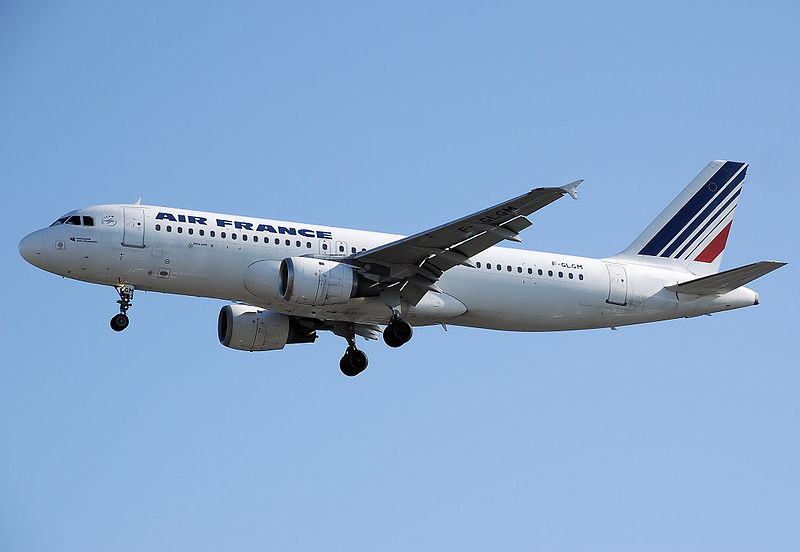
A320-100 and A320-200
Early in the programme, Airbus produced the initial A320‑100 variant, which featured a shorter range and lacked
the wingtip fences that would become a hallmark of later models. Only a small number of A320‑100s were built
before Airbus shifted production to the improved A320‑200.
The A320‑200 introduced increased fuel capacity and wingtip fences, giving the aircraft better range and
efficiency. This version quickly became the standard production model and formed the basis for the subsequent
A320 family developments, including the stretched A321 and the shorter A319 and A318.
Fly-By-Wire and Cockpit Innovation
One of the most significant innovations of the A320 was its digital fly‑by‑wire flight control system. Instead
of traditional mechanical linkages, pilot inputs are converted into electronic signals, processed by multiple
redundant computers, and then sent to the control surfaces. This allows the aircraft to incorporate flight
envelope protection, preventing excessive bank angles, stalls, and overspeeds within the normal law of
operation.
The A320 cockpit also introduced side‑stick controllers in place of conventional control columns, freeing up
space and improving ergonomics. Large electronic flight instrument system (EFIS) displays and the electronic
centralised aircraft monitor (ECAM) present pilots with clear, prioritised information, reducing workload and
enhancing situational awareness. These features have since become standard across the Airbus product line.
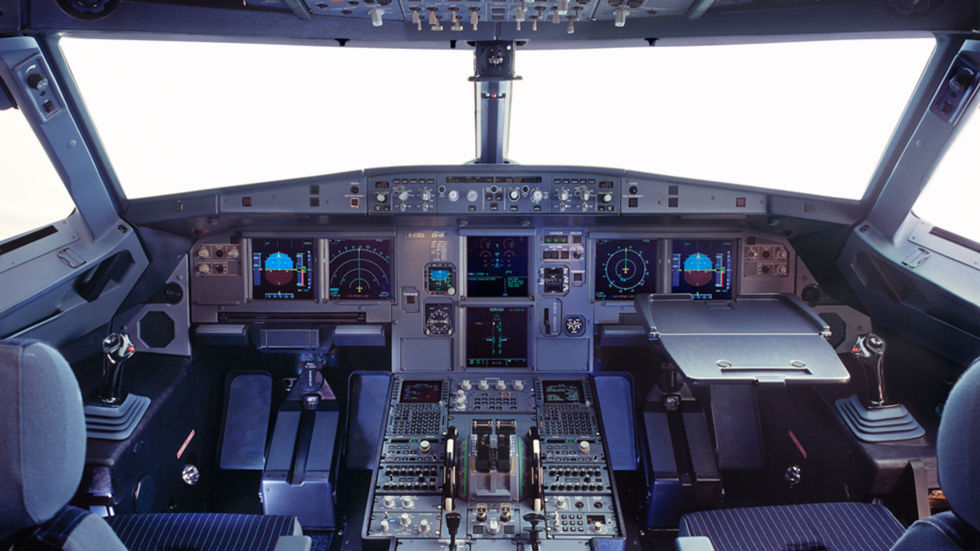
Flight Deck and Crew Experience
The A320’s flight deck was revolutionary at its introduction and remains one of the most recognisable in
commercial aviation. The combination of side‑stick controllers, large electronic displays, and the ECAM system
created a clean, intuitive workspace for pilots.
Over the years, Airbus has updated the avionics suite with improved displays, enhanced navigation capabilities,
and more efficient system monitoring. Despite these upgrades, the core layout has remained consistent, ensuring
that pilots transitioning between A318, A319, A320, A321, and even wide‑body Airbus aircraft benefit from a high
degree of commonality.
Expanding the A320 Family
Building on the success of the A320, Airbus expanded the family to cover a wide range of capacities and mission
profiles. This modular approach allowed airlines to match aircraft size to route demand while maintaining cockpit
commonality and streamlined maintenance.
A319
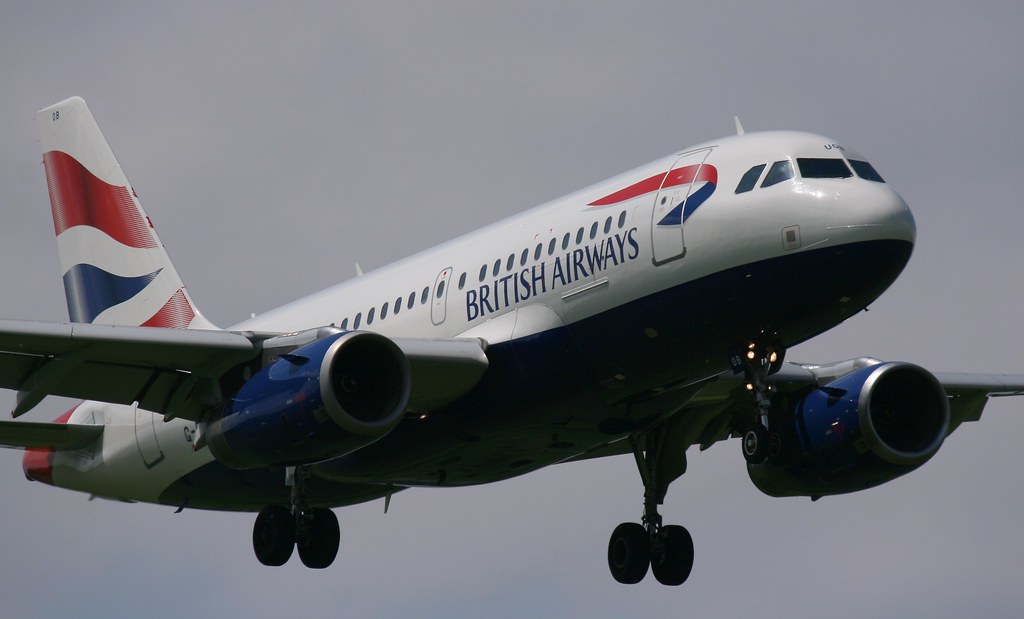
The A319 was developed as a shorter, lighter version of the A320, offering excellent economics on medium‑density
routes. It retained the A320’s systems and flight deck, making it a popular choice for both full‑service and
low‑cost carriers.
A321
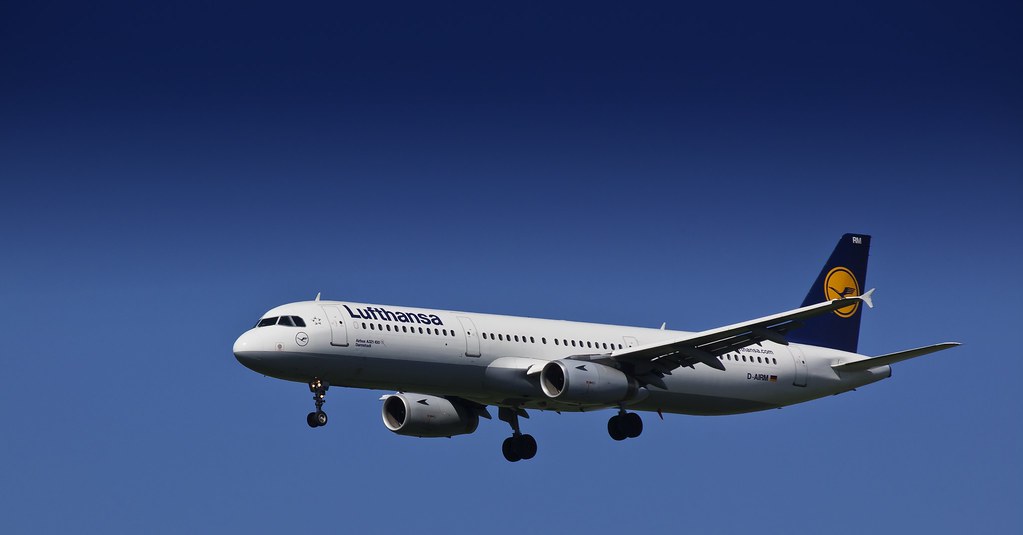
The A321 is the stretched member of the family, offering increased seating capacity and range. It became
particularly successful on high‑density short‑haul and medium‑haul routes, and later formed the basis for the
highly capable A321neo and A321LR/XLR variants.
A318
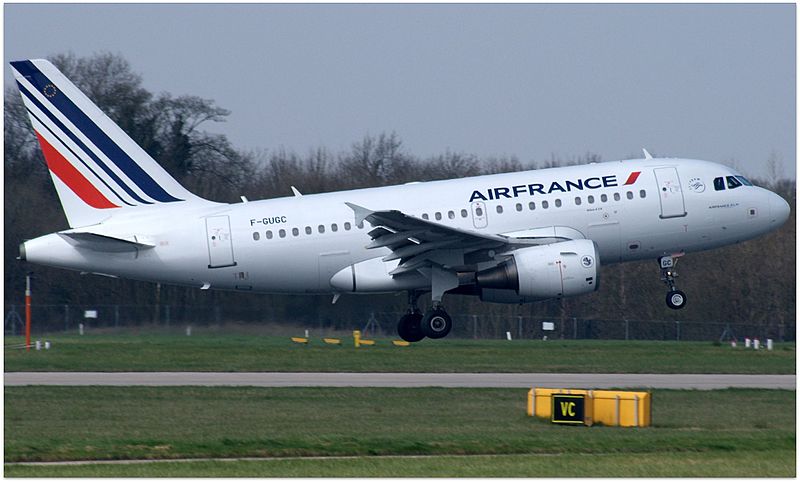
The smallest member of the family, the A318, was designed for niche markets requiring a compact aircraft with
full A320 commonality. Although produced in smaller numbers, it found roles in corporate aviation and on
challenging short‑runway routes.
A320ceo – Current Engine Option
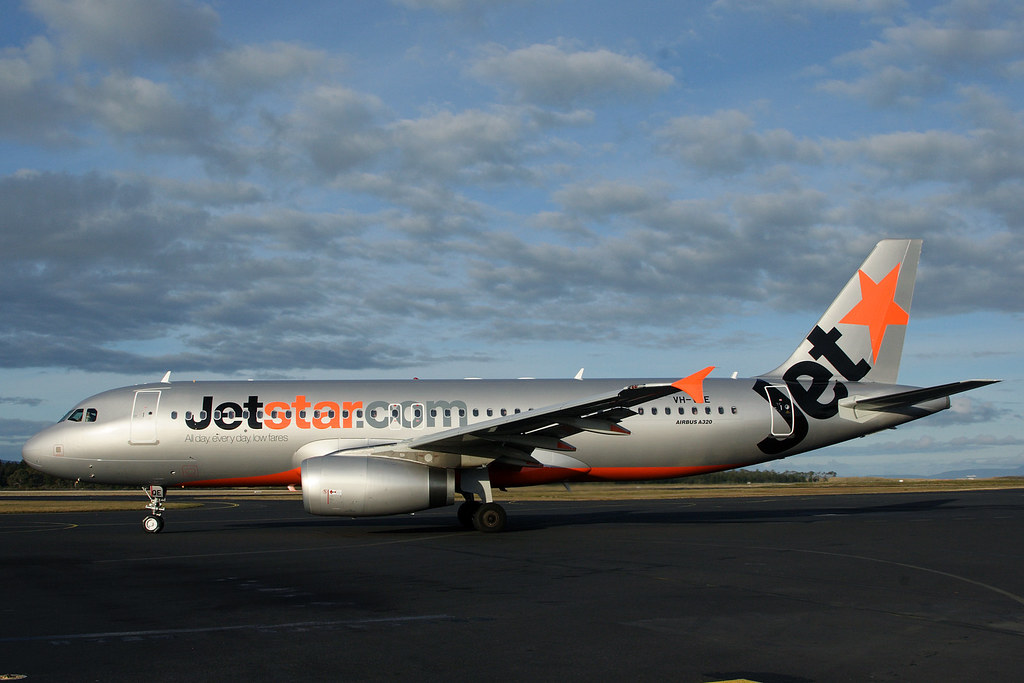
The original A320 family, now referred to as the ceo (Current Engine Option), continued to evolve
throughout the 1990s and 2000s. Improvements included aerodynamic refinements, updated cabin options, and
incremental weight and performance upgrades.
The ceo family remained highly competitive, offering airlines a proven, efficient platform with excellent
dispatch reliability and low operating costs.
A320 Enhanced
In the late 2000s, Airbus introduced the A320 Enhanced package, incorporating aerodynamic
improvements, updated cabin features, and more efficient engines. These upgrades reduced fuel burn and improved
passenger comfort while keeping the aircraft competitive against newer rivals.
The Enhanced package served as a bridge between the ceo models and the forthcoming neo generation.
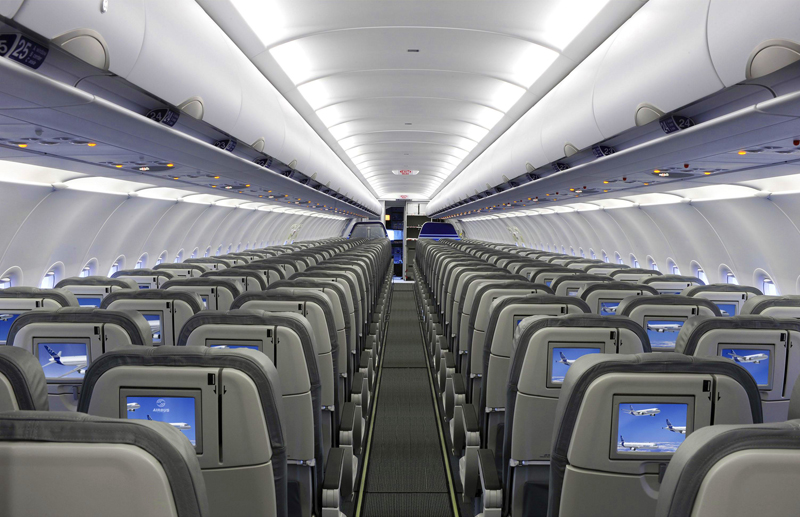
A320neo – New Engine Option
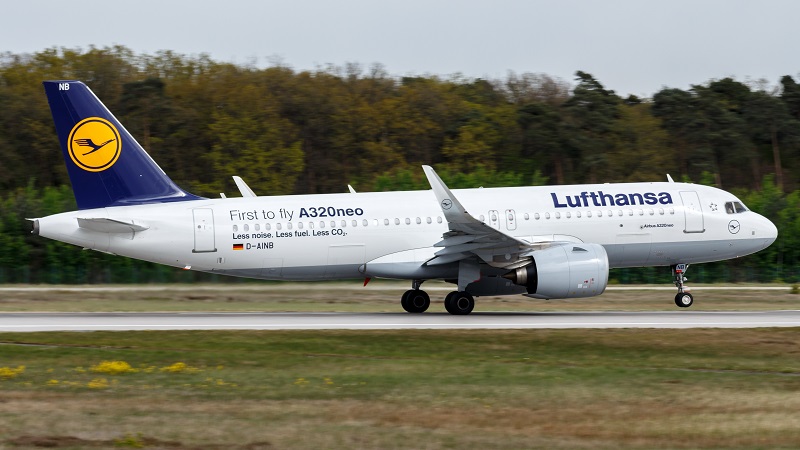
Launched in 2010, the A320neo (New Engine Option) represented the most significant upgrade to the
family since its introduction. Featuring new-generation engines and large sharklet winglets, the neo delivered
double‑digit reductions in fuel burn and emissions.
The A320neo quickly became the fastest‑selling commercial aircraft in history, with thousands of orders placed
before the first delivery.
Cabin Interior
The Airbus A320 family has long been recognised for its spacious and comfortable cabin. From the outset, Airbus
designed the A320 with a wider fuselage than its main competitor, allowing for wider seats, wider aisles, and a
more open feel. This design choice has remained a key selling point throughout the aircraft’s life.
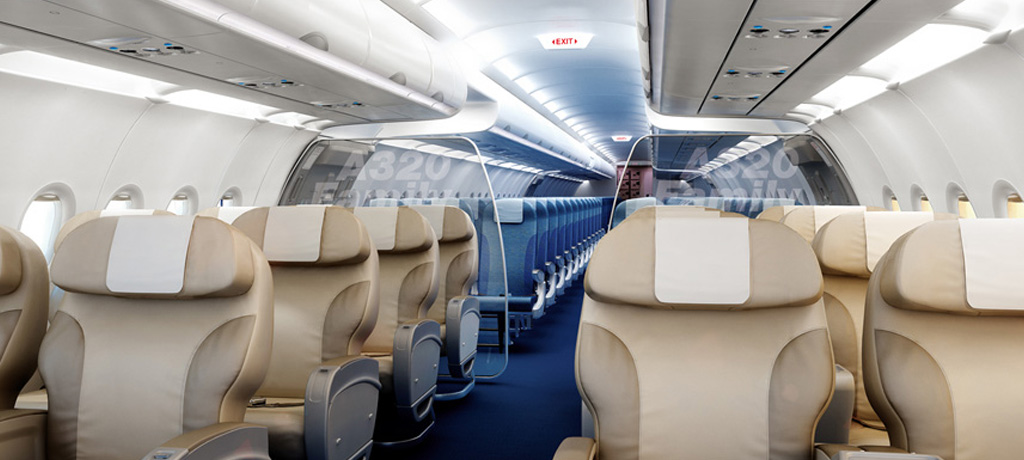
Airlines can configure the cabin in a variety of layouts, from high‑density single‑class arrangements to
premium two‑class configurations. Overhead bins have evolved through several generations, with the latest
“Airspace” bins offering significantly increased capacity and easier loading.
Seating and Passenger Experience
The A320 family’s cabin flexibility allows airlines to tailor the passenger experience to their brand. Seat
widths typically range from 17 to 18 inches, depending on configuration, and the aircraft’s relatively quiet
cabin contributes to a more comfortable flight.
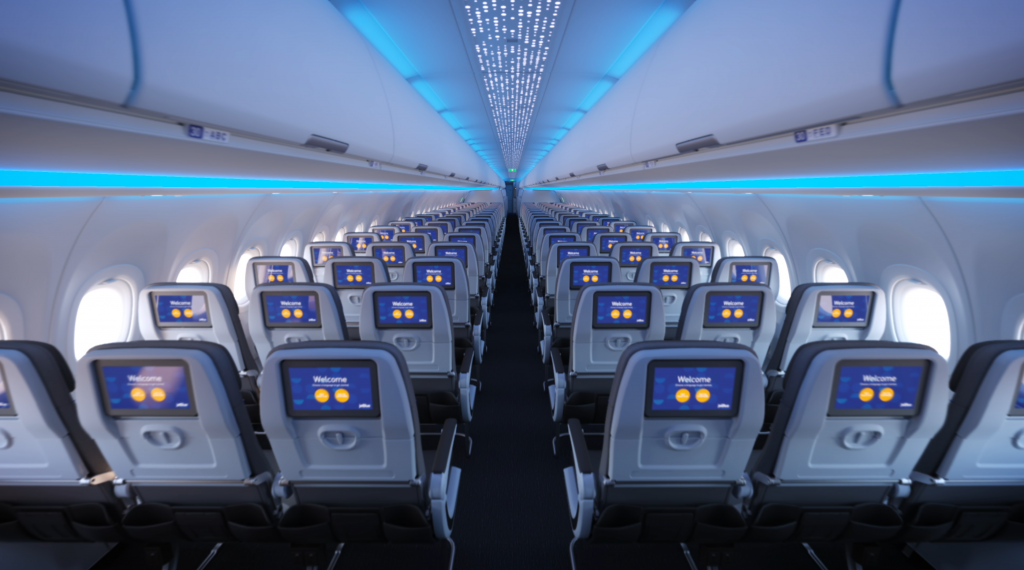
Modern A320 cabins often feature LED mood lighting, updated sidewalls, and improved air filtration systems.
Airbus’s Airspace cabin, introduced on the A320neo family, brings design elements from the A350 and A330neo,
including larger bins, redesigned lighting, and cleaner lines throughout the interior.
Cabin Technology and Systems
The A320 family incorporates advanced cabin systems designed to improve both passenger comfort and airline
efficiency. These include modern air‑conditioning packs, improved sound insulation, and integrated cabin
management systems that allow crew to control lighting, temperature, and announcements from a central panel.
Connectivity options have expanded significantly, with many airlines offering Wi‑Fi, streaming entertainment,
and USB or AC power at every seat. The A320neo family further enhances these systems with improved electrical
architecture and more efficient environmental controls.
Specifications
CEO values shown by default. NEO values shown in brackets where applicable.
| Type | A318 | A319 | A320 | A321 |
|---|---|---|---|---|
| Range | 5,750 km (3,100 nm) No NEO version |
6,950 km (3,750 nm) NEO: 6,950 km (3,750 nm) |
6,100 km (3,300 nm) NEO: 6,500 km (3,500 nm) |
5,950 km (3,200 nm) NEO: 7,400 km (4,000 nm) |
| Seating (Typical) | 107 (No NEO) | 124 (NEO 140) | 150 (NEO 165) | 185 (NEO 190) |
| Length | 31.44 m (103 ft 2 in) | 33.84 m (111 ft 0 in) | 37.57 m (123 ft 3 in) | 44.51 m (146 ft 0 in) |
| Wingspan | 34.10 m (111 ft 11 in) — With Sharklets: 35.8 m (117 ft 5 in) | |||
| Wing Area | 122.6 m² (1,320 sq ft) | |||
| Wing Sweep Back | 25° | |||
| Tail Height | 12.51 m (41 ft 1 in) | 11.76 m (38 ft 7 in) | 11.76 m (38 ft 7 in) | 11.76 m (38 ft 7 in) |
| Fuselage Width (Exterior) | 3.95 m (13 ft 0 in) | |||
| Cabin Width | 3.70 m (12 ft 2 in) | |||
| Fuselage Height | 4.14 m (13 ft 7 in) | |||
| Freight Capacity | 21.21 m³ (749 cu ft) | 27.62 m³ (975 cu ft) | 37.41 m³ (1,321 cu ft) | 51.73 m³ (1,827 cu ft) |
| Cruising Speed | Mach 0.78 (828 km/h / 511 mph at 11,000 m / 36,000 ft) | |||
| Maximum Operating Speed | Mach 0.82 (871 km/h / 537 mph at 11,000 m / 36,000 ft) | |||
| Maximum Altitude | 39,100–41,000 ft (11,900–12,500 m) | |||
| Maximum Fuel | 24,210 L (6,400 US gal) | 30,190 L (7,980 US gal) | 27,200 L (7,190 US gal) | 30,030 L (7,930 US gal) |
| Operating Empty Weight (OEW) | 39,500 kg (87,100 lb) No NEO |
40,800 kg (89,900 lb) NEO: 42,600 kg (93,900 lb) |
42,600 kg (93,900 lb) NEO: 44,300 kg (97,700 lb) |
48,500 kg (106,900 lb) NEO: 50,100 kg (110,500 lb) |
| Maximum Zero Fuel Weight (MZFW) | 54,500 kg (120,200 lb) | 58,500 kg (129,000 lb) | 62,500 kg (137,800 lb) | 73,800 kg (162,700 lb) |
| Maximum Landing Weight (MLW) | 57,500 kg (127,000 lb) | 62,500 kg (138,000 lb) | 66,000 kg (146,000 lb) | 77,800 kg (172,000 lb) |
| Maximum Takeoff Weight (MTOW) | 68,000 kg (150,000 lb) No NEO |
75,500 kg (166,000 lb) NEO: 75,500 kg (166,400 lb) |
78,000 kg (172,000 lb) NEO: 79,000 kg (174,200 lb) |
93,500 kg (206,000 lb) NEO: 97,000 kg (213,800 lb) |
| Takeoff Distance (MTOW) | 1,828 m (5,997 ft) | 2,164 m (7,100 ft) | 2,090 m (6,860 ft) | 2,560 m (8,400 ft) |
| Landing Distance (MLW) | 1,400 m (4,593 ft) | 1,500 m (4,921 ft) | ||
| Engines (CFM) | CFM56‑5 series | CFM56‑5 series NEO: LEAP‑1A or PW1100G |
||
| Engines (PW) | PW6000 series | IAE V2500 series | ||
| Thrust × 2 | 96–106 kN (22,000–24,000 lbf) No NEO |
98–120 kN (22,000–27,000 lbf) NEO: 107 kN (24,100 lbf) |
111–120 kN (25,000–27,000 lbf) NEO: 120.6 kN (27,120 lbf) |
133–147 kN (30,000–33,000 lbf) NEO: 147.3 kN (33,110 lbf) |
Launch Customers
The Airbus A320 attracted strong interest from European carriers at launch, with several major airlines placing
early orders that helped establish the programme’s momentum. These launch customers played a key role in bringing
the A320 into commercial service and demonstrating its capabilities to the global market.
- Air France
- British Caledonian
- Lufthansa
- Air Inter
- Inex Adria Airways
- Cyprus Airways
- Air Malta
- Air Lanka
- Air Europe
- British Airways
Orders and Deliveries
The A320 family has consistently been one of the world’s best‑selling airliner series, with strong demand from
both legacy carriers and low‑cost operators. The table below reflects the cumulative orders and deliveries for
the A320 family as supplied in your original page.
| Model | Orders | Deliveries |
|---|---|---|
| A318 | 80 | 80 |
| A319 | 1,486 | 1,490 |
| A320 | 4,863 | 4,763 |
| A321 | 2,451 | 2,292 |
| A320neo | 4,863 | 1,216 |
| A321neo | 5,166 | 1,025 |
Correct as at end of November 2022.
Operators
The Airbus A320 family is operated by hundreds of airlines worldwide, ranging from major legacy carriers to
low‑cost operators and regional airlines. Its flexibility, efficiency, and commonality across variants have made
it one of the most widely adopted aircraft families in aviation history.
Some of the largest A320 family operators include:
- American Airlines
- China Southern Airlines
- easyJet
- IndiGo
- Lufthansa
- AirAsia
- JetBlue
- Qantas / Jetstar
- Vueling
- Wizz Air
Many national carriers also rely on the A320 family for domestic and regional operations, while numerous
low‑cost carriers have built their entire business models around the aircraft’s efficiency and reliability.
Related Aircraft
The A320 family sits at the centre of Airbus’s commercial aircraft lineup. For readers exploring the broader
Airbus range, the following aircraft provide useful context:
- Airbus A300
- Airbus A310
- Airbus A330
- Airbus A340
- Airbus A350
- Airbus A380
Conclusion
Since its introduction in the late 1980s, the Airbus A320 family has transformed commercial aviation. Its
pioneering fly‑by‑wire controls, efficient design, and flexible family concept set new standards for the
industry. With the ongoing success of the A320neo and its long‑range derivatives, the A320 family continues to
evolve and remains one of the most important and influential aircraft programmes in history.
From short‑haul domestic flights to extended‑range operations, the A320 family has proven itself as a reliable,
efficient, and adaptable platform — one that will continue shaping global air travel for decades to come.