
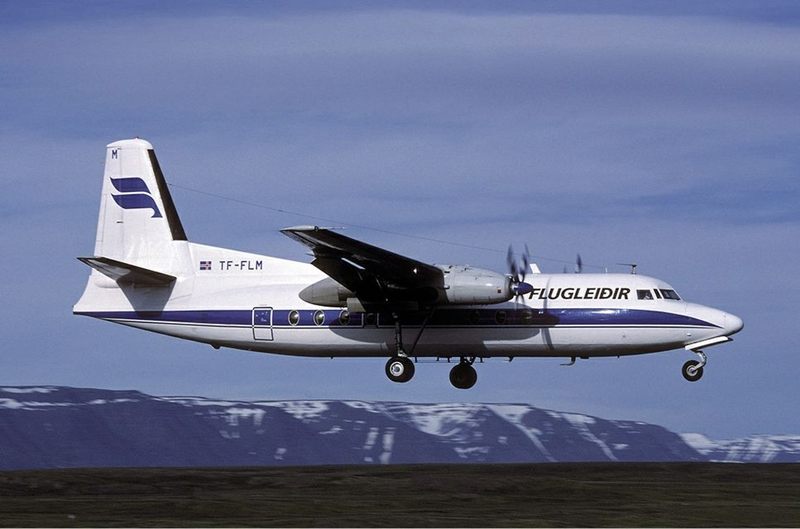
The Fokker F27 Friendship is one of the most successful and influential turboprop airliners ever built. Designed in the early 1950s as a modern replacement for the Douglas DC‑3, the F27 introduced pressurisation, improved passenger comfort, and the reliability of Rolls‑Royce Dart turboprop engines. Its high‑wing configuration, rugged construction, and adaptable cabin made it ideal for regional airlines, military operators, and specialised missions around the world.
Produced from 1955 to 1987, the F27 became a global success story. Fokker built 581 aircraft in the Netherlands, while Fairchild produced an additional 206 under licence in the United States, including the stretched FH‑227. Over its 32‑year production run, the F27 evolved into numerous variants, serving roles ranging from passenger transport and cargo operations to maritime patrol, troop carrying, and even humanitarian medical missions.
The F27’s reliability, versatility, and comfortable cabin earned it widespread adoption across almost every continent. Many aircraft flew for multiple operators throughout their lifetimes, and several remain in service today—more than six decades after the type first took to the skies. The Friendship stands as a testament to Fokker’s engineering innovation and remains one of the most iconic European airliners of its era.
Fokker F27 Friendship — At a Glance
| Category | Details |
|---|---|
| Manufacturer | Fokker (Netherlands) / Fairchild (USA under licence) |
| First Flight | 24 November 1955 |
| Production Years | 1955–1987 |
| Total Built | 787 (581 Fokker + 206 Fairchild) |
| Engines | 2 × Rolls‑Royce Dart turboprops |
| Typical Seating | 44–52 passengers (variant dependent) |
| Range | 1,800–1,900 km (972–1,181 mi) |
| Cruise Speed | Mach 0.38–0.42 (259–281 knots) |
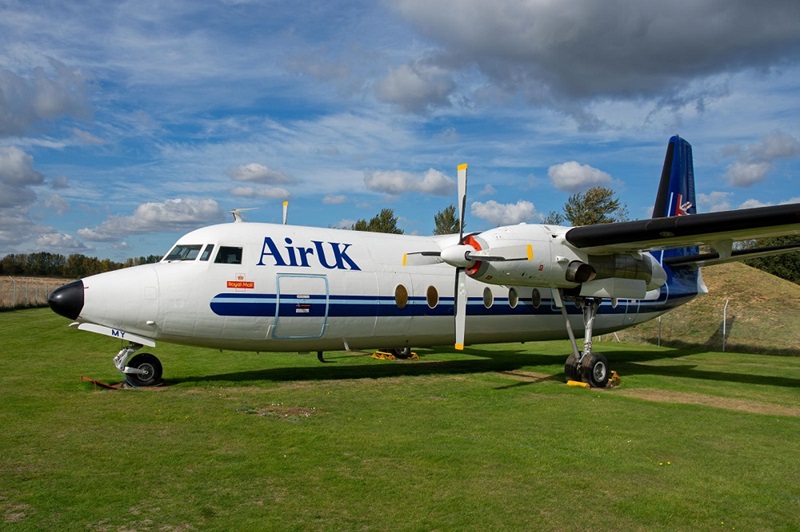
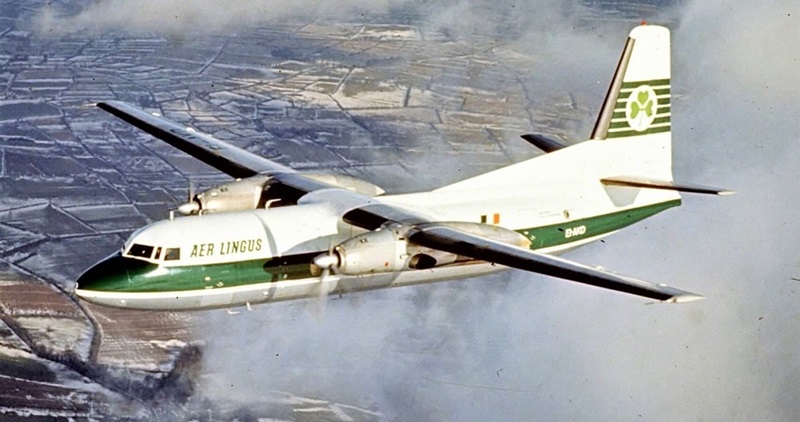
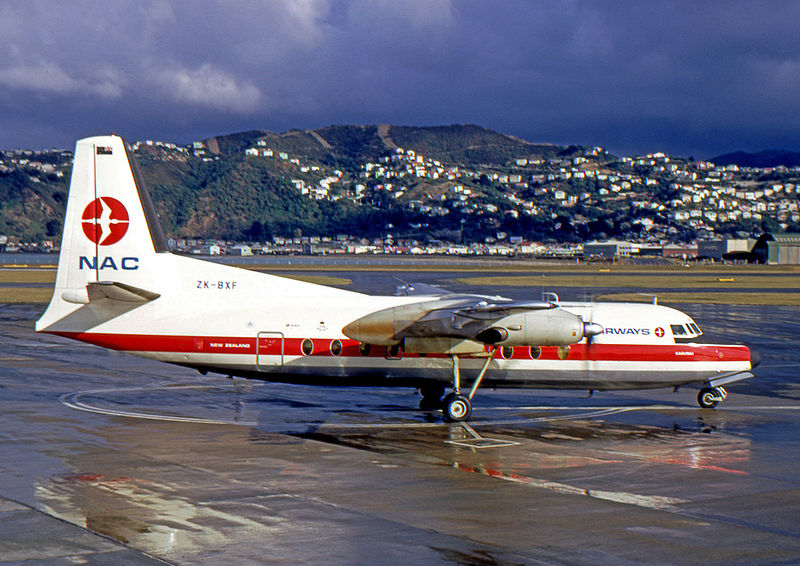
| Notable Operators | Aer Lingus (launch customer), Air UK, Ansett, NAC New Zealand, Royal Netherlands Air Force, US Army (C‑31A), SonAir Angola, plus dozens of regional carriers worldwide. |

Development Timeline
| Year | Milestone |
|---|---|
| Early 1950s | Fokker begins conceptual work on a modern turboprop successor to the Douglas DC‑3. |
| 1953 | Chief Constructor Kees van Meerten leads the design team; high‑wing layout and Rolls‑Royce Dart engines selected. |
| 1954 | Prototype construction begins using glued‑sandwich structural techniques. |
| 24 Nov 1955 | First flight of the F27 prototype, lasting 34 minutes. |
| 1956–1957 | Fuselage lengthened by 1 metre; capacity increased from 28 to 32 passengers. |
| 1958 | Aer Lingus becomes launch customer; first production aircraft delivered. |
| Late 1950s | Fairchild signs licence agreement to build the F27 in the USA; later develops the stretched FH‑227. |
| 1960s | Introduction of multiple variants including F27‑200, F27‑300M Troopship, and combi/cargo versions. |
| 1970s | Extended fuselage F27‑500 enters service with increased seating capacity. |
| 1980s | Maritime patrol and specialised military variants developed for global operators. |
| 1987 | Final F27 produced, ending a 32‑year manufacturing run with 787 aircraft built. |
| 1990s–2020s | Numerous F27s continue flying worldwide in passenger, cargo, military, and humanitarian roles; many preserved in museums. |
History
In the years following World War II, airlines around the world relied heavily on surplus Douglas DC‑3 aircraft. These dependable workhorses enabled carriers such as KLM to resume scheduled services, but their piston‑engine technology and unpressurised cabins were becoming outdated. Fokker recognised the need for a modern replacement—an aircraft offering improved comfort, greater efficiency, and the advantages of turboprop power.
Led by Chief Constructor Kees van Meerten, Fokker began developing a new regional airliner that would surpass the DC‑3 in every respect. The result was the Fokker F27 Friendship, a high‑wing, pressurised turboprop designed for short to medium‑range operations. The prototype made its maiden flight on 24 November 1955, a 34‑minute hop that marked the beginning of one of the most successful turboprop programmes in aviation history.
The F27 quickly attracted international interest. Fokker produced 581 aircraft in the Netherlands, while American manufacturer Fairchild built an additional 206 under licence. Fairchild also developed its own stretched derivative, the FH‑227, which saw widespread use in North America and beyond. In total, 787 F27‑series aircraft were produced, making it one of the most successful Western turboprops ever built.
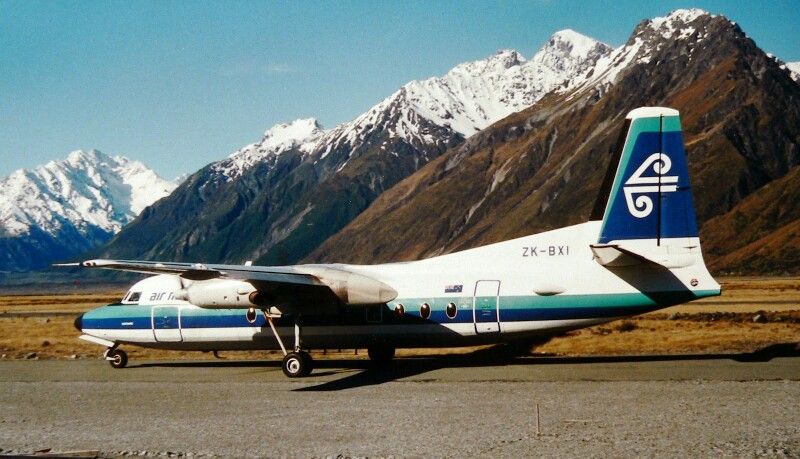
The aircraft’s reliability, rugged construction, and adaptable cabin made it popular with airlines on almost every continent. Numerous operators flew the F27 throughout its long career, including Aer Lingus—the launch customer—Air UK, Ansett, and New Zealand’s National Airways Corporation (NAC). Many aircraft served with military forces, including the Royal Netherlands Air Force and the US Army, which operated the C‑31A Troopship.
Over its 32‑year production span, the F27 evolved into numerous specialised variants. These included the F27‑100, the original 44‑seat model; the F27‑200 with more powerful Dart engines; the F27‑300M and F27‑400M Troopship military transports; combi and cargo versions with large freight doors; and the extended‑fuselage F27‑500. Maritime patrol variants were also developed, including the F27 Maritime and the armed Maritime Enforcer.
The F27 proved exceptionally versatile. Many aircraft flew for six to ten different operators during their lifetimes, reflecting the type’s adaptability and robust design. Some were converted for VIP transport, cargo operations, maritime patrol, and even firefighting as water bombers. One F27 was famously transformed into a flying eye clinic, delivering essential medical care to remote communities.
Even decades after production ended, the F27 continues to serve in various roles around the world. As of 2020, several aircraft remained operational in countries such as Iran, Indonesia, Argentina, and with the Spanish Navy. Many others have been preserved in aviation museums, including the third prototype and the first production aircraft at the Aviodrome in Lelystad, Netherlands.
The Fokker F27 Friendship played a pivotal role in shaping regional aviation. Its innovative design, dependable performance, and remarkable longevity cemented its place as one of the most iconic turboprop airliners of the 20th century.
Specifications
| Type | Fokker F27 Friendship |
|---|---|
| First Flight | 24 November 1955 |
| Crew | 2–3 |
| Passengers | 44–52 |
| Cabin Width (Internal) | 2.1 m (6 ft 11 in) |
| Cabin Height (Internal) | 2.0 m (6 ft 7 in) |
| Aircraft Length |
25.06 m (82 ft 3 in)
F27‑500: 26.56 m (87 ft 2 in) |
| Tail Height |
8.5 m (27 ft 11 in)
F27‑500: 8.7 m (28 ft 7 in) |
| Main Wing Span | 29.0 m (95 ft 2 in) |
| Main Wing Area | 70 m² (750 ft²) |
| Operating Empty Weight |
20,400 kg (26,786 lb)
F27‑500: 11,200 kg (24,692 lb) |
| MTOW |
20,400 kg (44,974 lb)
F27‑500: 19,770 kg (43,585 lb) |
| Engines × 2 |
Rolls‑Royce Dart Mk.532 — 2 × 2,050 hp
F27‑500: Dart Mk.532‑7 — 2 × 2,250 hp |
| Speed (Max) | Mach 0.38 — 259 kn / 298 mph / 480 km/h |
| Speed (Max) | Mach 0.42 — 281 kn / 323 mph / 520 km/h |
| Service Ceiling | 29,500 ft (8,990 m) |
| Range (Fully Laden) |
1,800 km / 972 nm / 1,118 mi
F27‑500: 1,900 km / 1,026 nm / 1,181 mi |
Variants
| Variant | Description |
|---|---|
| F27‑100 | Original production model with seating for 44 passengers. Powered by Rolls‑Royce Dart Mk.528 engines. |
| F27‑200 | Upgraded version featuring more powerful Rolls‑Royce Dart 7 Mk.528 engines for improved performance. |
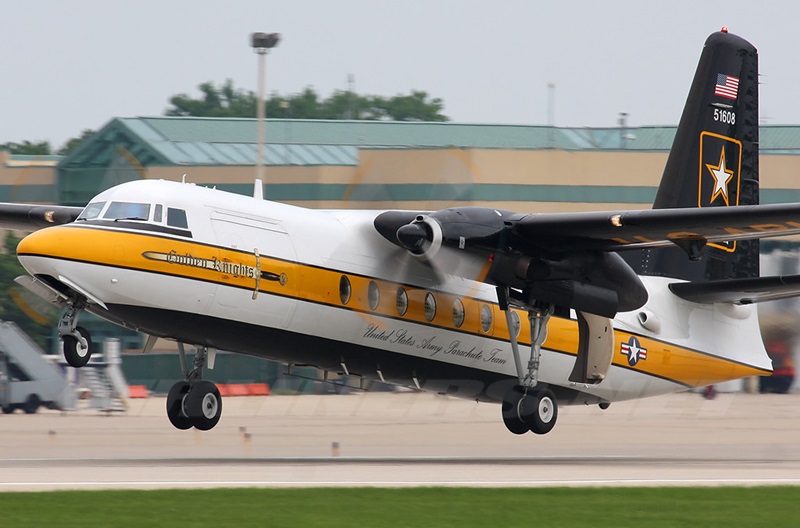
| F27‑300M “Troopship” | Military transport variant for the Royal Netherlands Air Force. Configurable for troop transport, cargo, and parachute operations. |
| F27‑400M “Troopship” | Military version produced for the US Army and other operators. Similar to the 300M with additional mission flexibility. |
| F27‑400 | Civilian version of the 400 series with improved systems and optional cargo door configurations. |
| F27‑500 | Stretched fuselage variant offering increased seating capacity. Popular with airlines requiring higher passenger loads. |
| F27‑500F | Cargo‑focused version of the stretched F27‑500, equipped with a large freight door for improved loading capability. |
| F27 Maritime | Maritime patrol variant fitted with specialised sensors and mission equipment for coastal surveillance. |
| F27 Maritime Enforcer | Armed maritime patrol version capable of carrying weapons and advanced detection systems. |
| F27 Combi | Mixed‑use passenger and cargo configuration. Popular with regional operators requiring operational flexibility. |
| F27 Cargo | Dedicated freighter variant featuring a large cargo door and reinforced flooring. |
| F27 VIP | Customised executive transport version with enhanced interior fittings and reduced seating. |
| Special Mission Variants | Numerous specialised conversions including firefighting water bombers, humanitarian medical aircraft, and airborne survey platforms. |
| Fairchild FH‑227 | Stretched American‑built derivative of the F27. Featured increased capacity and was widely used in North and South America. |
Assembly
The Fokker F27 Friendship was designed and built during a period of significant innovation in European aircraft manufacturing. Fokker’s engineers focused on creating a modern, efficient regional airliner that would surpass the ageing Douglas DC‑3 in comfort, performance, and reliability. To achieve this, the company adopted advanced construction techniques that were ahead of their time.
One of the most notable features of the F27’s construction was the use of bonded, glued‑sandwich structures. This method involved bonding aluminium skins to lightweight core materials, producing strong yet weight‑efficient components. The technique was applied extensively throughout the aircraft, including the wings and fuselage sections, resulting in improved durability and reduced maintenance requirements.
The F27’s high‑wing configuration was chosen for both operational and structural advantages. It provided excellent ground clearance for the Rolls‑Royce Dart turboprop engines, improved passenger visibility, and allowed the aircraft to operate from short or unpaved runways. The wing itself was built as a robust, single‑piece centre section with outer panels attached during final assembly. This design contributed to the aircraft’s reputation for strength and reliability.
The fuselage was constructed in multiple sections, each produced with precision to ensure accurate alignment during assembly. Early prototypes featured a shorter fuselage, but Fokker later extended the design by one metre to increase passenger capacity. This modification was incorporated into production models and became a defining feature of the F27’s evolution.
The Rolls‑Royce Dart engines were mounted on reinforced wing structures and connected to the aircraft’s systems through modular components that simplified maintenance. The Dart’s proven reliability made it an ideal choice for regional operations, and its performance contributed significantly to the F27’s global success.
Final assembly took place at Fokker’s facilities in the Netherlands, where aircraft were fitted with interiors tailored to customer requirements. Fairchild, producing the aircraft under licence in the United States, followed similar assembly processes and introduced its own stretched derivative—the FH‑227—which shared many structural characteristics with the original F27.
Throughout its production life, the F27 benefited from continuous improvements in manufacturing techniques, materials, and systems integration. These refinements ensured that the aircraft remained competitive and capable across a wide range of roles, from passenger transport and cargo operations to military and maritime missions.
Interior
Comfort and practicality were central to the design philosophy of the Fokker F27 Friendship. Step aboard the aircraft and you would find yourself in a cabin crafted to provide a pleasant and relaxing experience for passengers, whether travelling short regional hops or longer multi‑stop journeys. Fokker placed great emphasis on creating an inviting interior that balanced comfort, functionality, and operational flexibility.
The cabin layout of the F27 was highly adaptable, allowing operators to configure seating arrangements to suit their specific needs. Depending on the variant and customer requirements, the aircraft could comfortably accommodate between 44 and 52 passengers. The seating offered generous legroom and ergonomic support, with plush upholstery designed to enhance comfort throughout the flight.
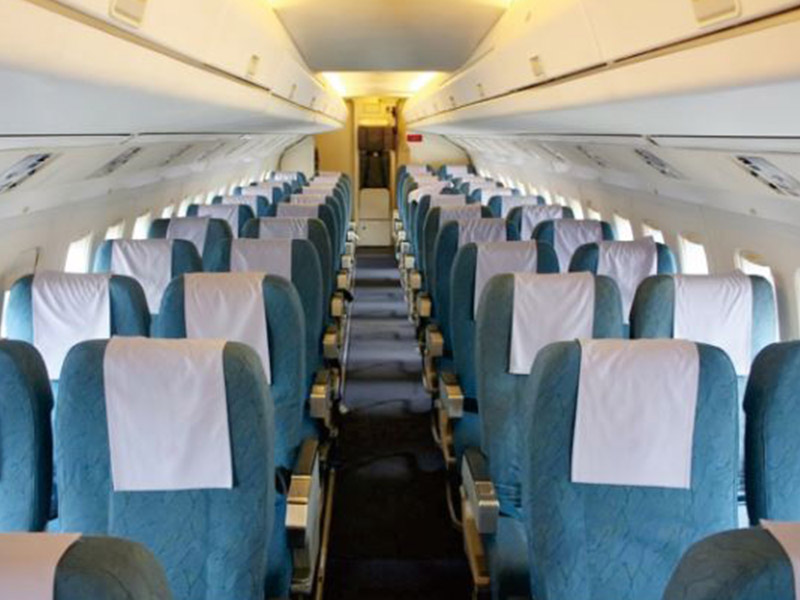
The cabin was thoughtfully pressurised, ensuring a smooth and comfortable experience as the aircraft climbed to higher altitudes. This system reduced the effects of pressure changes—such as ear popping—and contributed to a more enjoyable flight for passengers.
Large windows lined the cabin, offering excellent views of the world below. Thanks to the aircraft’s high‑wing configuration, passengers enjoyed unobstructed visibility of landscapes, coastlines, and city skylines. These expansive views became one of the F27’s most appreciated features, adding a sense of openness and connection to the journey.
The interior of the F27 was not only designed for comfort but also for operational versatility. Some aircraft were configured exclusively for passenger service, offering a cosy and intimate environment. Others were built as combi variants, combining passenger seating with dedicated cargo space. This flexibility made the F27 a favourite among regional airlines and operators serving remote or mixed‑traffic routes.
Over the years, Fokker continuously refined the cabin to meet evolving passenger expectations. Improvements included updated seating materials, enhanced lighting systems, modernised interior finishes, and optional entertainment features. These upgrades ensured that the F27 remained competitive and appealing throughout its long service life.
Legacy
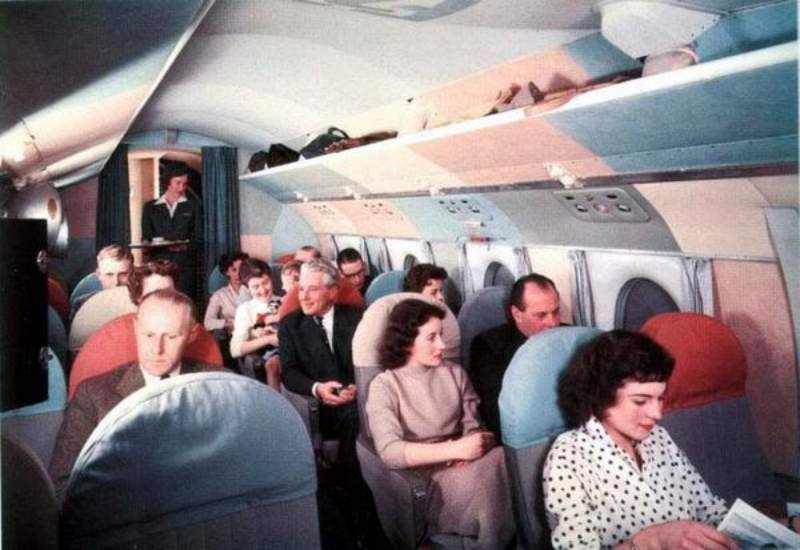
Few regional airliners have achieved the longevity, global reach, and enduring reputation of the Fokker F27 Friendship. From its first flight in 1955 to the present day, the F27 has left a lasting mark on commercial aviation, military operations, and humanitarian missions around the world. Its rugged construction, dependable Rolls‑Royce Dart engines, and adaptable cabin made it one of the most versatile turboprops ever built.
The F27 served with airlines on every continent, often operating in challenging environments where reliability was essential. Many aircraft flew for multiple operators throughout their lifetimes, reflecting the type’s durability and ease of maintenance. In remote regions of Africa, Asia, and South America, the F27 became a lifeline for communities, connecting towns and villages that lacked modern infrastructure.
Military operators also embraced the F27. The Royal Netherlands Air Force flew several variants, including the C‑1, C‑2, and C‑3, while the US Army operated the C‑31A Troopship. These aircraft performed troop transport, parachute training, cargo delivery, and liaison duties. Their reliability and short‑field performance made them ideal for demanding military missions.
The F27’s versatility extended far beyond passenger and military service. Some aircraft were converted into water bombers for firefighting, while others became airborne survey platforms or maritime patrol aircraft. One F27 was famously transformed into a flying eye clinic, delivering vital medical care to remote communities that lacked access to specialised treatment.
Even decades after production ended in 1987, the F27 continued to operate in various roles. As recently as 2020, aircraft remained active in countries such as Iran, Indonesia, Argentina, and with the Spanish Navy. The type’s longevity is a testament to its robust engineering and the enduring reliability of the Rolls‑Royce Dart engines.
Today, many F27s have found new homes in aviation museums around the world. The third prototype and the first production aircraft are preserved at the Aviodrome in Lelystad, Netherlands, where they stand as proud reminders of Fokker’s engineering achievements. Other examples are displayed in Australia, New Zealand, the United States, and across Europe, ensuring that future generations can appreciate the aircraft that helped shape regional aviation.
The Fokker F27 Friendship remains one of the most iconic turboprop airliners of the 20th century. Its combination of comfort, reliability, and adaptability ensured a legacy that continues to this day—more than six decades after its first flight.