
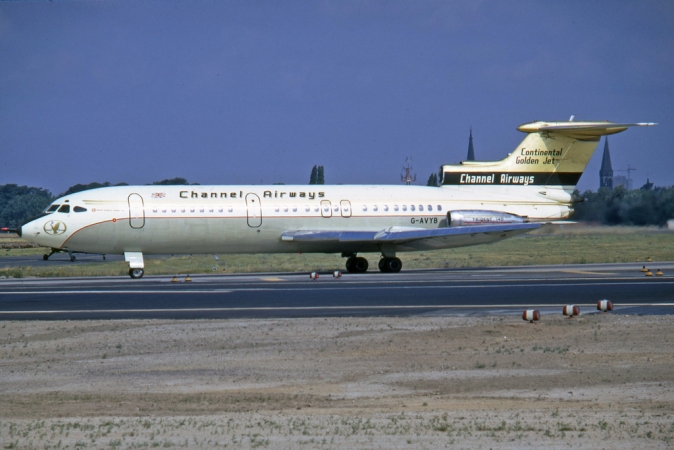

Hawker Siddeley was one of Britain’s most influential aerospace manufacturers, responsible for a wide range of civil and military aircraft from the 1930s through the 1970s. Formed through a series of mergers and acquisitions, the company became a cornerstone of the United Kingdom’s aviation industry, producing aircraft that served airlines, air forces, and governments around the world.
During the post‑war era, Hawker Siddeley played a major role in shaping commercial aviation. Its designs ranged from regional turboprops to advanced tri‑jets, including the HS‑748, HS‑125 business jet, and the Hawker Siddeley Trident—one of the earliest trijets to enter airline service. The company was also deeply involved in military aviation, contributing to iconic aircraft such as the Hawker Hunter and the revolutionary Harrier jump‑jet.
By the late 1960s, Hawker Siddeley had become a key participant in multinational aerospace collaborations, including the development of the Airbus A300. Although the company was eventually absorbed into British Aerospace (BAe) in 1977, its engineering legacy continued through aircraft still flying today and through its foundational role in the creation of Europe’s modern aerospace industry.

At‑a‑Glance Summary
| Item | Details |
|---|---|
| Company Name | Hawker Siddeley Aircraft |
| Founded | 1935 (through mergers of Armstrong Whitworth, Hawker Aircraft, and others) |
| Headquarters | Kingston‑upon‑Thames, United Kingdom |
| Primary Activities | Civil and military aircraft design, manufacturing, and systems development. |
| Major Civil Aircraft | Hawker Siddeley Trident HS‑748 HS‑125 (later the BAe 125 / Hawker 800 series) Andover (HS‑780) |
| Major Military Aircraft | Hawker Hunter Hawker Sea Hawk Hawker Harrier (early development) |
| Key Innovations | Early trijet airliner design (Trident), advanced autopilot systems, V/STOL development groundwork for the Harrier. |
| Major Collaborations | Airbus A300 (founding partner), British Aircraft Corporation (BAC), Rolls‑Royce engine programmes. |
| Company Fate | Absorbed into British Aerospace (BAe) in 1977; legacy continued through BAe and later Airbus. |
| Legacy | A major contributor to British and European aerospace development; several Hawker Siddeley aircraft remain in service today. |
Development Timeline
| Year | Milestone |
|---|---|
| 1935 | Hawker Aircraft, Armstrong Whitworth, Gloster Aircraft, and Avro merge under the Hawker Siddeley Group, forming one of Britain’s largest aviation conglomerates. |
| 1940s | Hawker Siddeley becomes a major supplier of military aircraft during World War II, including the Hawker Hurricane and Hawker Tempest. |
| 1950s | Expansion into jet aircraft production, including the Hawker Hunter and Sea Hawk. The company begins developing civil aircraft such as the HS‑125 business jet. |
| 1960 | Work begins on the HS‑121 Trident, one of the world’s first trijet airliners, featuring advanced automatic landing systems. |
| 1962 | First flight of the Hawker Siddeley Trident, marking a major step in British commercial aviation technology. |
| 1964 | Introduction of the HS‑748 regional turboprop, which becomes one of the company’s most successful civil aircraft worldwide. |
| Late 1960s | Hawker Siddeley becomes a founding partner in the Airbus A300 programme, contributing to the creation of Europe’s unified aerospace industry. |
| 1970 | Development of the HS‑780 Andover, a military transport variant of the HS‑748, enters service with the Royal Air Force. |
| 1971 | The HS‑125 gains international popularity, becoming one of the world’s most successful business jets and later evolving into the BAe 125 and Hawker 800 series. |
| 1977 | Hawker Siddeley Aircraft is absorbed into British Aerospace (BAe) during the UK government’s consolidation of the aviation industry. |
| 1980s–2000s | Hawker Siddeley designs continue in production under BAe and later Raytheon/Beechcraft, with the HS‑125 lineage remaining in service for decades. |
History
Hawker Siddeley Aircraft emerged in 1935 as one of the United Kingdom’s most significant aviation conglomerates. Formed through the merger of several major British manufacturers—including Hawker Aircraft, Armstrong Whitworth, Gloster Aircraft, and Avro—the new group consolidated engineering talent, production facilities, and design expertise under a single organisation. This structure allowed Hawker Siddeley to become a dominant force in both military and civil aviation throughout the mid‑20th century.
During World War II, the company played a crucial role in Britain’s air defence. Its subsidiaries produced iconic fighters such as the Hawker Hurricane and Hawker Tempest, which contributed heavily to the Royal Air Force’s success. The post‑war years saw Hawker Siddeley transition from piston‑engine fighters to jet‑powered aircraft, leading to the development of the Hawker Hunter and Sea Hawk—two of the most successful British jets of the 1950s.
As commercial aviation expanded, Hawker Siddeley diversified into civil aircraft. The HS‑125 business jet became one of the world’s most enduring executive aircraft, while the HS‑748 turboprop gained widespread popularity among regional airlines for its reliability and rugged performance. These designs helped establish the company as a major supplier of short‑haul and corporate aircraft.
One of Hawker Siddeley’s most ambitious civil projects was the HS‑121 Trident. Designed during the early 1960s, the Trident became one of the world’s first trijet airliners and introduced advanced automatic landing systems that were decades ahead of their time. Although the aircraft faced commercial challenges due to shifting airline requirements, it remains an important milestone in British aviation engineering.
By the late 1960s, Hawker Siddeley was increasingly involved in multinational aerospace collaboration. The company became a founding partner in the Airbus A300 programme, contributing to the creation of a unified European aircraft industry. This partnership laid the groundwork for what would eventually become Airbus, one of the world’s largest aircraft manufacturers.
In 1977, the UK government consolidated several aerospace companies, and Hawker Siddeley Aircraft was absorbed into the newly formed British Aerospace (BAe). Although the Hawker Siddeley name gradually disappeared from aircraft production, many of its designs continued in service for decades. The HS‑125 evolved into the BAe 125 and later the Hawker 800 series, while the HS‑748 and Andover remained in operation with airlines and military forces worldwide.
Today, Hawker Siddeley is remembered as a cornerstone of British aviation history. Its contributions to jet fighter development, regional airliner design, and early European aerospace cooperation helped shape the modern aviation landscape. The company’s legacy lives on through aircraft still flying and through its foundational role in the creation of British Aerospace and Airbus.
Key Aircraft Produced
| Aircraft | Role | First Flight | Production |
|---|---|---|---|
| Hawker Siddeley HS‑121 Trident | Tri‑jet airliner | 1962 | 117 built |
| Hawker Siddeley HS‑748 | Regional turboprop airliner | 1960 | 380 built |
| Hawker Siddeley HS‑125 | Business jet | 1962 | Over 1,700 built (including BAe/Hawker variants) |
| Hawker Siddeley Andover (HS‑780) | Military transport | 1965 | 31 built |
| Hawker Hunter | Jet fighter | 1951 | 1,972 built |
| Hawker Sea Hawk | Carrier‑based fighter | 1947 | 542 built |
| Hawker Siddeley Harrier | V/STOL attack aircraft | 1967 | Harrier family: 824 built |
| Other Notable Designs | Various civil & military types | — | Including the Avro series, Gloster jets, and Armstrong Whitworth aircraft inherited through mergers. |
Hawker Siddeley’s aircraft portfolio spanned regional airliners, business jets, military fighters, and pioneering V/STOL designs. Many of these aircraft remained in service for decades, and several—particularly the HS‑125 and Harrier—continued evolving long after the Hawker Siddeley name disappeared from production lines.
Assembly & Production Facilities
Hawker Siddeley Aircraft operated one of the most extensive and geographically distributed manufacturing networks in British aviation. Because the company was formed through the merger of several major aircraft builders, production was spread across multiple facilities, each specialising in particular aircraft types, components, or stages of assembly. This structure allowed Hawker Siddeley to produce a wide range of civil and military aircraft simultaneously, from jet fighters to regional airliners.
One of the most important sites was the Kingston‑upon‑Thames factory, originally home to Hawker Aircraft. Kingston served as the design and development centre for many of the company’s military aircraft, including the Hawker Hunter and the pioneering Harrier jump‑jet. The facility was known for its engineering innovation and played a central role in advancing British jet technology during the 1950s and 1960s.
Civil aircraft production was largely centred at Woodford and Bitteswell. The Woodford plant, inherited from Avro, became a major assembly site for the HS‑748 regional turboprop and its military derivative, the Andover. Bitteswell, located near Lutterworth, handled significant portions of HS‑125 business jet production, including fuselage assembly, systems integration, and flight‑test preparation. These facilities were known for their high manufacturing standards and contributed to the long service life of Hawker Siddeley’s civil aircraft.
Additional production capacity came from the company’s other subsidiaries. The former Armstrong Whitworth works at Baginton supported component manufacturing and sub‑assembly, while the Hatfield facility—originally part of de Havilland and later absorbed into the Hawker Siddeley Group—contributed to various airframe and systems programmes. This distributed approach allowed Hawker Siddeley to scale production efficiently and respond to both military and commercial demand.
Aircraft assembly typically followed a structured process across the group’s facilities. Major fuselage sections were built at specialised plants, then transported to final assembly lines where wings, tail surfaces, landing gear, and systems were integrated. Each aircraft underwent rigorous ground testing, including pressurisation checks, avionics calibration, and engine runs, before moving to dedicated flight‑test centres. This process ensured that Hawker Siddeley aircraft met the high reliability standards required by airlines and military operators.
Even after the company was absorbed into British Aerospace (BAe) in 1977, many of Hawker Siddeley’s production facilities continued operating for decades. The HS‑125 line, for example, remained in production through multiple ownership changes, eventually becoming part of the Hawker Beechcraft family. The legacy of Hawker Siddeley’s manufacturing expertise lives on through these facilities and through aircraft that remain in service around the world.
Orders & Deliveries
Hawker Siddeley Aircraft produced a wide range of civil and military aircraft between the 1930s and 1970s. Its designs were operated by airlines, air forces, and governments around the world, with several types achieving significant export success. The table below summarises the company’s major aircraft programmes, total production numbers, and key customers.
| Aircraft | Total Built | Primary Customers | Notes |
|---|---|---|---|
| HS‑121 Trident | 117 | BEA (British European Airways), CAAC China, Pakistan International Airlines | Early trijet airliner; advanced automatic landing systems. |
| HS‑748 | 380 | Indian Airlines, VARIG, Aerolíneas Argentinas, Royal Air Force (Andover variant) | One of the company’s most successful civil aircraft; widely exported. |
| HS‑125 | 1,700+ (including BAe/Hawker variants) | Worldwide corporate operators; RAF; US military (as C‑29) | One of the world’s longest‑produced business jets. |
| HS‑780 Andover | 31 | Royal Air Force | Military transport variant of the HS‑748. |
| Hawker Hunter | 1,972 | RAF, Swiss Air Force, Indian Air Force, Dutch Air Force, Belgian Air Force | Major export success; operated by over 20 countries. |
| Hawker Sea Hawk | 542 | Royal Navy, Indian Navy, German Navy, Dutch Navy | Carrier‑based jet fighter; strong export demand. |
| Hawker Siddeley Harrier | 824 (Harrier family) | RAF, Royal Navy, US Marine Corps, Indian Air Force | Revolutionary V/STOL aircraft; continued under BAe and later Boeing. |
| Other Aircraft | Various | Worldwide civil and military operators | Includes Avro, Gloster, and Armstrong Whitworth designs inherited through mergers. |
Across its civil and military programmes, Hawker Siddeley delivered thousands of aircraft to operators around the world. Several types—particularly the HS‑125, HS‑748, Hunter, and Harrier—became long‑term export successes and remained in service for decades. These aircraft helped establish Hawker Siddeley as one of Britain’s most influential aerospace manufacturers.
Legacy
Hawker Siddeley Aircraft left an enduring mark on both British and global aviation. As one of the United Kingdom’s most influential aerospace manufacturers, the company helped shape the transition from piston‑engine aircraft to the jet age, producing designs that served airlines, air forces, and governments for decades. Its engineering philosophy—practical, robust, and forward‑looking—became a hallmark of British aircraft design throughout the mid‑20th century.
The company’s civil aircraft, particularly the HS‑748 and HS‑125, achieved long‑term commercial success and widespread international adoption. The HS‑125 evolved into one of the world’s most successful business jets, remaining in production through multiple ownership changes and flying well into the 21st century. The HS‑748 became a dependable regional workhorse, valued for its reliability and ability to operate from challenging airfields. These aircraft demonstrated Hawker Siddeley’s ability to deliver practical solutions for airlines and corporate operators alike.
In the military sector, Hawker Siddeley produced several iconic aircraft that defined an era. The Hawker Hunter became one of the most successful British jet fighters ever built, serving with more than 20 air forces worldwide. The Harrier jump‑jet, developed under Hawker Siddeley before continuing with British Aerospace, revolutionised vertical/short take‑off and landing (V/STOL) technology and remains one of the most distinctive combat aircraft ever produced. These designs showcased the company’s engineering innovation and its ability to push the boundaries of aviation capability.
Hawker Siddeley also played a foundational role in the creation of Europe’s modern aerospace industry. As a key partner in the early Airbus A300 programme, the company helped establish the multinational cooperation that would later evolve into Airbus—now one of the world’s largest aircraft manufacturers. This contribution ensured that Hawker Siddeley’s influence extended far beyond its own aircraft, shaping the future of commercial aviation on a global scale.
Although the company was absorbed into British Aerospace (BAe) in 1977, its legacy continued through aircraft still flying and through the engineering expertise carried forward into BAe and later Airbus. Many Hawker Siddeley designs remained in service for decades, a testament to their durability, practicality, and forward‑thinking design. Today, Hawker Siddeley is remembered as a cornerstone of British aviation history—an innovator whose aircraft helped define the jet age and whose influence continues to be felt across the aerospace industry.