
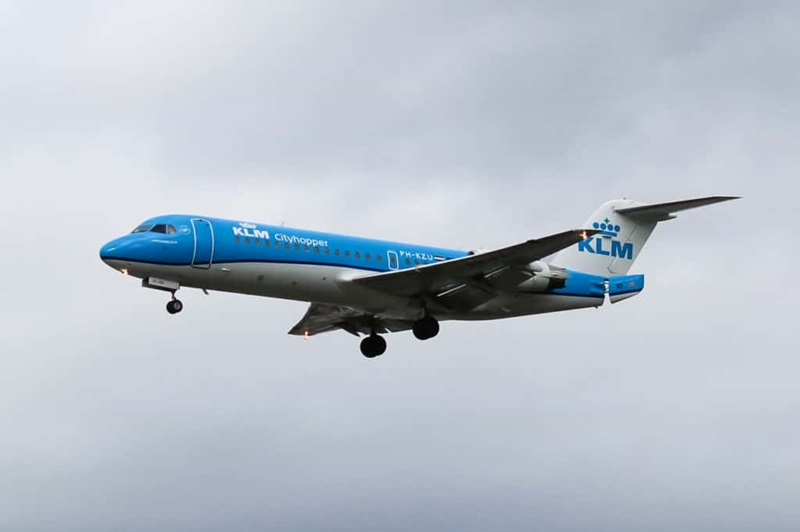
Fokker Aircraft Company
Fokker is one of the most iconic names in aviation history. Founded in 1912 by Dutch aviation pioneer Anthony Fokker, the company quickly established itself as a leader in aircraft innovation and design. Its early military aircraft, particularly during World War I, earned global recognition for their engineering sophistication and effectiveness.
Following the war, Fokker transitioned into commercial aviation and produced a series of successful airliners that helped shape early passenger travel. Aircraft such as the Fokker F.VII and Fokker F.XX became staples of European and international routes, cementing the company’s reputation for reliability and forward‑thinking design.
Despite its achievements, Fokker faced mounting financial challenges in the 1990s and ultimately declared bankruptcy in 1996. The brand and its support operations were later acquired by Stork Aerospace and subsequently GKN Aerospace, which continues to provide maintenance, parts, and technical support for Fokker aircraft still in service.
Today, Fokker remains a respected name in aviation circles. Its aircraft — particularly the F27 Friendship, F28 Fellowship, F70, and F100 — continue to fly around the world, a testament to the company’s engineering legacy and lasting impact on regional aviation.
Fokker at a Glance
| Founded | 1912 |
| Founder | Anthony Fokker |
| Country | Netherlands |
| Headquarters | Amsterdam (historical) |
| Key Aircraft Families | F27 Friendship, F28 Fellowship, F70, F100 |
| Years Active | 1912–1996 |
| Fate | Bankrupt in 1996; brand acquired by Stork Aerospace, later GKN Aerospace |
| Notable Achievements | Early WWI fighter innovations; pioneering commercial airliners; one of the most successful regional aircraft manufacturers of the 20th century. |

Development Timeline
The history of the Fokker Aircraft Company spans more than eight decades, marked by innovation, engineering breakthroughs, and a lasting influence on both military and commercial aviation. The timeline below highlights the major milestones in the company’s development.
| Year | Milestone |
|---|---|
| 1912 | Anthony Fokker founds the Fokker Aeroplanbau in Germany, later relocating operations to the Netherlands. |
| 1914–1918 | Fokker becomes world‑famous for its World War I fighter aircraft, including the Eindecker series and the Dr.I triplane. |
| 1920s | Fokker transitions to commercial aviation, producing successful airliners such as the F.VII, widely used in Europe and the United States. |
| 1930s | The company expands internationally, establishing production facilities and partnerships in the United States. |
| 1940s–1950s | Post‑war rebuilding leads to new aircraft development, culminating in the highly successful F27 Friendship regional turboprop. |
| 1960s | Fokker enters the jet age with the F28 Fellowship, a short‑haul twin‑jet that becomes popular with airlines worldwide. |
| 1980s | Development of the Fokker F50 turboprop and the Fokker F100 jetliner, both modernised successors to earlier designs. |
| 1990s | Financial difficulties intensify despite strong aircraft performance; the smaller F70 is introduced as a derivative of the F100. |
| 1996 | Fokker declares bankruptcy; support operations are later taken over by Stork Aerospace and eventually GKN Aerospace. |
| 2000s–Present | Fokker aircraft continue flying worldwide, supported by GKN Aerospace. The F27, F28, F70, and F100 remain staples of regional aviation history. |
History
The story of the Fokker Aircraft Company begins with its founder, Anthony Fokker, one of aviation’s earliest and most influential pioneers. Born in the Netherlands and educated in Germany, Fokker built his first aircraft in 1910 and quickly demonstrated a natural talent for aeronautical engineering. By 1912, he had established the Fokker Aeroplanbau, laying the foundation for what would become one of Europe’s most important aircraft manufacturers.
Fokker’s early success came during World War I, when the company produced several groundbreaking fighter aircraft for the German military. The most famous of these was the Fokker Eindecker, notable for its synchronised machine‑gun system that allowed pilots to fire through the propeller arc — a revolutionary innovation that briefly gave Germany air superiority. Other designs, including the Dr.I triplane flown by Manfred von Richthofen, further cemented Fokker’s reputation for engineering ingenuity.
After the war, Fokker returned to the Netherlands and shifted focus to commercial aviation. The 1920s saw the rise of the Fokker F.VII, a rugged and reliable airliner that became one of the most widely used aircraft of its era. It played a key role in establishing early passenger routes across Europe and the United States, and its success helped Fokker become the world’s largest aircraft manufacturer by the mid‑1920s.
The company continued to innovate through the 1930s, expanding internationally and developing new aircraft for both civil and military use. However, the outbreak of World War II disrupted production, and the company faced significant challenges during the conflict and the post‑war rebuilding period.
Fokker re‑emerged strongly in the 1950s with the introduction of the F27 Friendship, a modern twin‑turboprop that became one of the most successful regional airliners ever built. Its reliability, performance, and passenger comfort made it a favourite among airlines worldwide. The jet‑powered F28 Fellowship followed in the 1960s, marking Fokker’s entry into the short‑haul jet market.
The 1980s brought further development with the F50 turboprop and the F100 jetliner, both designed as modern successors to earlier models. The smaller F70, introduced in the early 1990s, offered airlines a flexible option for lower‑demand routes. Despite strong aircraft performance, Fokker struggled financially due to rising development costs, increased competition, and limited market share against larger manufacturers.
By 1996, the company could no longer sustain operations and declared bankruptcy. Its support and maintenance activities were eventually taken over by Stork Aerospace and later GKN Aerospace, ensuring continued service for the thousands of Fokker aircraft still flying around the world.
Today, Fokker’s legacy lives on through its aircraft, many of which remain in service decades after their introduction. The F27, F28, F70, and F100 continue to be admired for their engineering quality and operational reliability, securing Fokker’s place as one of the most influential regional aircraft manufacturers of the 20th century.
Specifications
The table below compares the key specifications of Fokker’s most significant commercial aircraft: the F27 Friendship, F28 Fellowship, F70, and F100. These aircraft formed the backbone of Fokker’s regional aviation legacy from the 1950s through the 1990s.
| Aircraft | Type | First Flight | Typical Seating | Engines | Cruise Speed | Range |
|---|---|---|---|---|---|---|
| Fokker F27 Friendship | Twin‑turboprop regional airliner | 1955 | 40–52 passengers | 2 × Rolls‑Royce Dart turboprops | 460 km/h (250 knots) | 1,900 km |
| Fokker F28 Fellowship | Twin‑jet short‑haul airliner | 1967 | 65–85 passengers | 2 × Rolls‑Royce Spey turbofans | 800 km/h (430 knots) | 1,700–2,000 km |
| Fokker F70 | Twin‑jet regional airliner | 1993 | 70 passengers | 2 × Rolls‑Royce Tay 620 turbofans | 800 km/h (430 knots) | 2,100 km |
| Fokker F100 | Twin‑jet regional airliner | 1986 | 97–122 passengers | 2 × Rolls‑Royce Tay 650 turbofans | 845 km/h (456 knots) | 2,600 km |
Assembly
Throughout its long history, the Fokker Aircraft Company operated several major production facilities, with final assembly concentrated primarily in the Netherlands. The company’s manufacturing approach evolved significantly over time, reflecting changes in aircraft technology, materials, and market demands.
In the early years, Fokker’s military aircraft were built in Germany, where Anthony Fokker first established his operations. After World War I, production shifted to the Netherlands, with factories in Amsterdam becoming the centre of Fokker’s commercial aircraft manufacturing. These facilities produced the company’s early airliners, including the F.VII, which helped establish Fokker as a global leader in passenger aircraft during the 1920s.
Post‑war expansion led to modernised assembly lines and new production techniques. The introduction of the F27 Friendship in the 1950s marked a major step forward, with the aircraft built using advanced metalworking processes and modular construction. The F27’s wings, fuselage sections, and tail assemblies were manufactured separately and brought together in Amsterdam for final assembly, testing, and certification.
As Fokker entered the jet age, production of the F28 Fellowship and later the F70 and F100 required more sophisticated facilities. The company invested heavily in tooling, composite materials, and aerodynamic testing. While Amsterdam remained the primary assembly location, additional work was carried out at Woensdrecht Air Base, which supported component manufacturing, structural assembly, and maintenance operations.
Fokker also collaborated with international partners for certain components. Rolls‑Royce supplied engines for the F28, F70, and F100, while avionics and interior systems were sourced from European and American suppliers. These partnerships allowed Fokker to maintain competitive aircraft designs despite its relatively small size compared to larger manufacturers.
By the 1990s, assembly operations were increasingly challenged by rising production costs and limited market share. Despite efficient manufacturing processes and strong aircraft performance, financial pressures ultimately led to the company’s closure in 1996. Today, GKN Aerospace continues to support Fokker aircraft worldwide, maintaining the tooling, documentation, and expertise required to keep the fleet operational.
Fokker Airliners
Fokker produced several of the most successful regional airliners of the 20th century. The aircraft below represent the company’s core commercial lineup, each of which has its own dedicated Modern Airliners page.
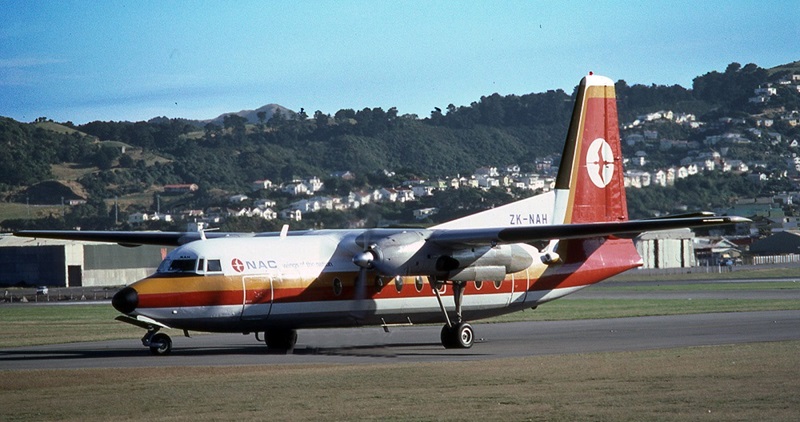
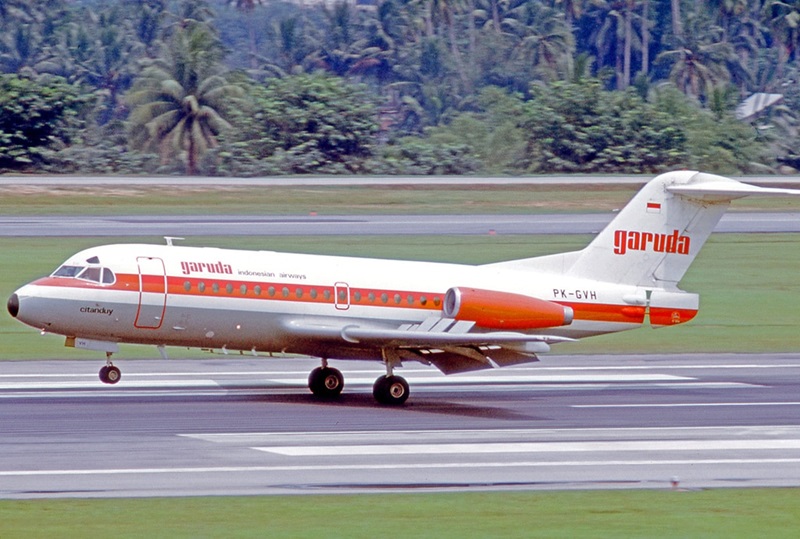
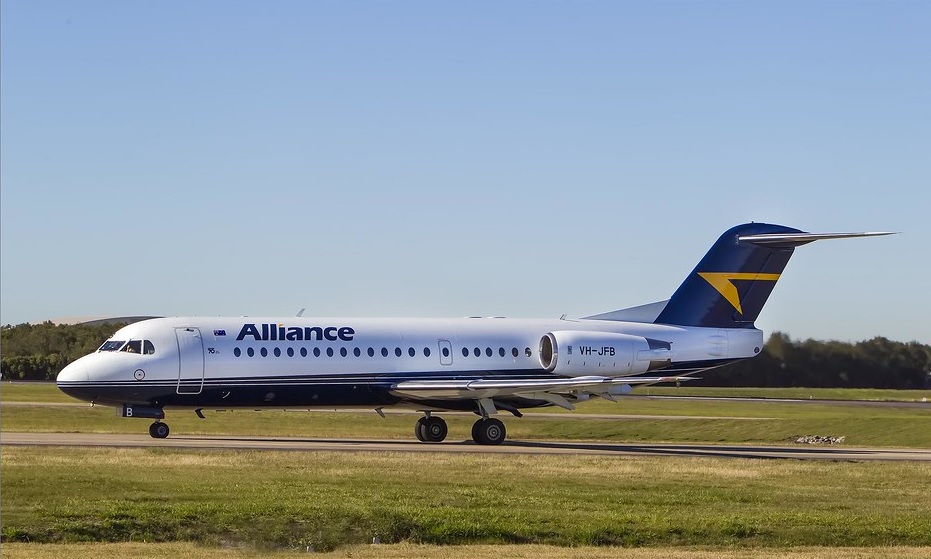 Fokker F70 VH‑JFB at Brisbane” width=”800″>
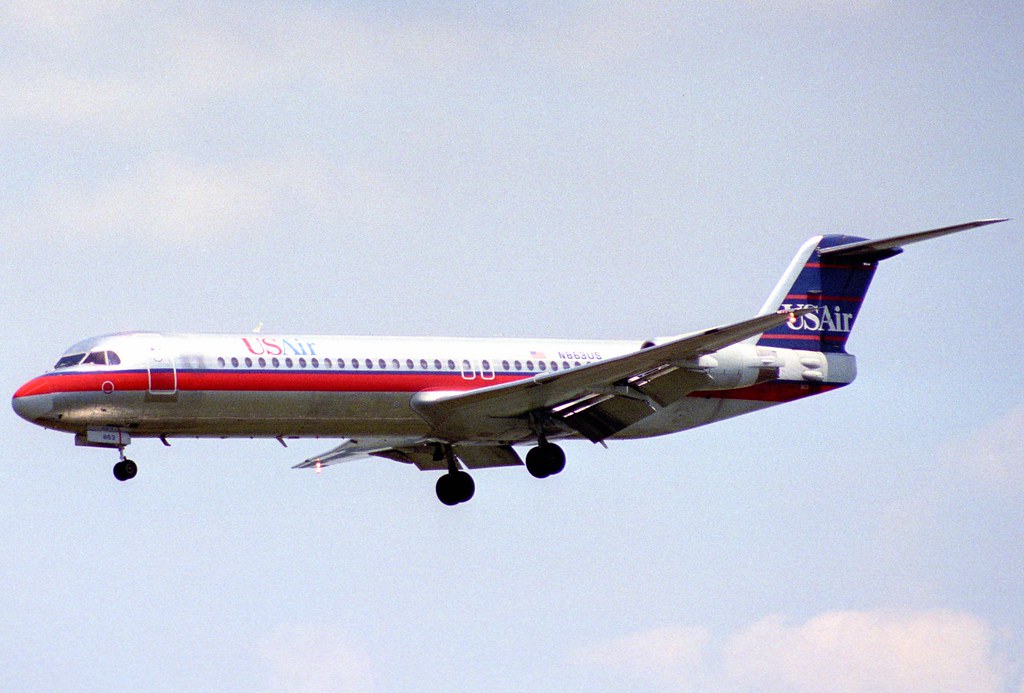 Fokker F100 N863US at Washington DCA, 1995″ width=”800″>
Legacy
The legacy of the Fokker Aircraft Company is defined by innovation, reliability, and a lasting influence on regional aviation. From its earliest military aircraft to its highly successful commercial airliners, Fokker consistently demonstrated an ability to design aircraft that met the needs of airlines and passengers across multiple generations.
The F27 Friendship became one of the most successful turboprops ever built, serving airlines on every continent and setting new standards for durability and performance. Its jet‑powered successor, the F28 Fellowship, carried Fokker into the modern era of short‑haul travel, while the later F70 and F100 provided airlines with efficient, comfortable, and versatile regional jet options throughout the 1980s and 1990s.
Although the company ultimately succumbed to financial pressures in 1996, its aircraft continue to fly today, supported by GKN Aerospace and a global network of operators and maintenance organisations. Many Fokker aircraft remain in service decades after their introduction, a testament to the company’s engineering quality and the enduring appeal of its designs.
Fokker’s influence can still be felt in the regional aviation market, where its aircraft helped shape the expectations of airlines and passengers alike. The company’s commitment to practical, dependable aircraft ensured its place in aviation history, and its designs remain among the most respected and recognisable regional airliners ever built.