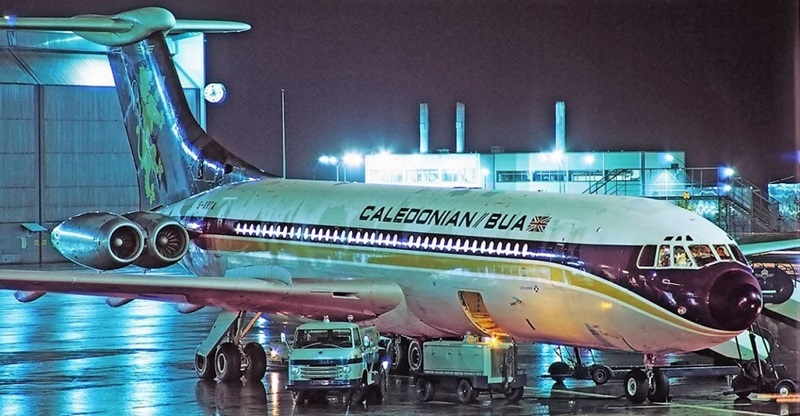
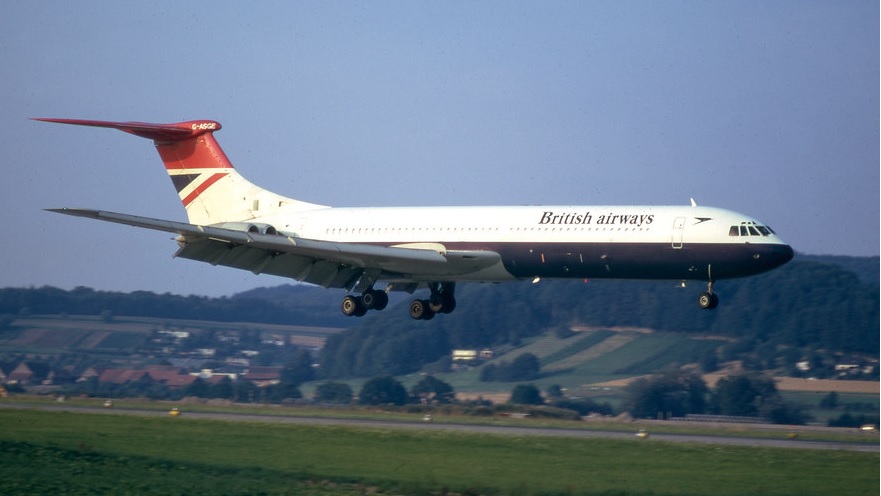
The Vickers VC10 stands as one of Britain’s most distinctive and elegant jet airliners, instantly recognisable by its rear‑mounted engines and soaring T‑tail. Designed to meet the demanding requirements of B.O.A.C.’s African route network, the VC10 combined strong performance from hot‑and‑high airfields with a remarkably quiet and comfortable passenger experience. Its clean wing, free from engine pylons, and full‑length leading‑edge slats gave the aircraft excellent lift characteristics, while the rear‑mounted Rolls‑Royce Conway engines reduced cabin noise to levels unmatched by its contemporaries.
Although competing aircraft such as the Boeing 707 and Douglas DC‑8 ultimately dominated the global market, the VC10 carved out a loyal following among passengers and crews. Its ability to operate from shorter and more challenging runways, combined with its refined cabin environment, made it a favourite on long‑haul routes. The VC10 also went on to serve with several African carriers and later became a highly successful transport and air‑to‑air refuelling aircraft with the Royal Air Force.

At‑a‑Glance.
| Category | Details |
|---|---|
| Manufacturer | Vickers‑Armstrongs / British Aircraft Corporation (BAC) |
| First Flight | June 1962 |
| Primary Operator | B.O.A.C. (later British Airways) |
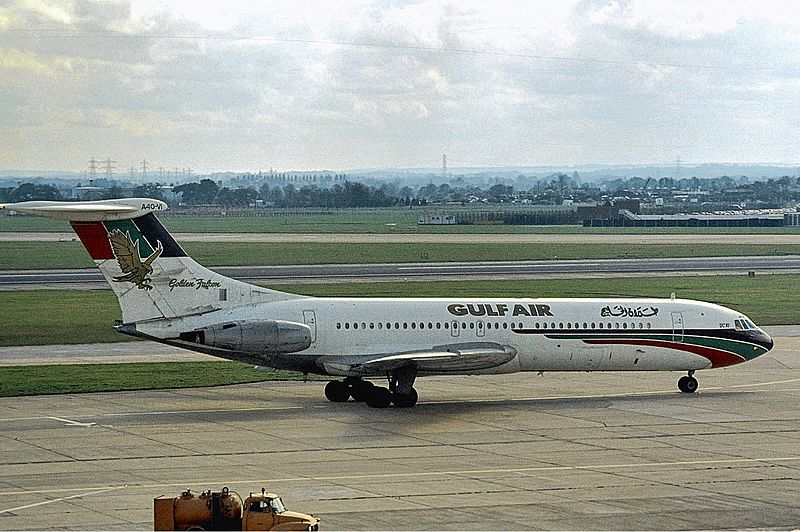
| Other Operators | East African Airways, Ghana Airways, Air Malawi, British United Airways, Royal Air Force (RAF) |
| Engine Type | Four rear‑mounted Rolls‑Royce Conway turbofans |
| Key Design Features | Clean wing; full‑length leading‑edge slats; rear‑mounted engines; T‑tail; quiet cabin |
| Performance Highlight | Holds the sub‑sonic trans‑Atlantic record: 5 hours 1 minute |
| Notable Strengths | Excellent hot‑and‑high performance; short‑field capability; low cabin noise; strong African route suitability |
Development Timeline.
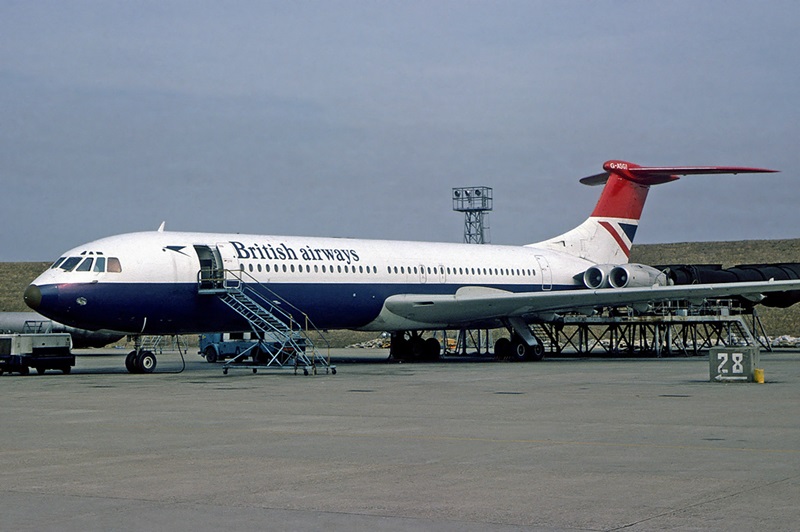
Late 1950s — BOAC defines requirements
B.O.A.C. identifies the need for an aircraft capable of operating from hot‑and‑high African airfields with short runways and challenging surface conditions. These requirements form the foundation of the VC10 design brief.
Early 1960s — Vickers engineers begin design work
Led by Sir George Edwards, Vickers‑Armstrongs develops a unique configuration featuring rear‑mounted Rolls‑Royce Conway engines, a clean wing, full‑length leading‑edge slats, and a distinctive T‑tail. Wider low‑pressure tyres are added to cope with rougher African runways.
June 1962 — First flight
The VC10 takes to the air for the first time, demonstrating excellent lift performance, quiet cabin characteristics, and strong short‑field capability.
1964 — Entry into service with BOAC
BOAC introduces the VC10 into long‑haul operations. Passengers praise the quiet cabin, and the aircraft quickly becomes a favourite on African and trans‑Atlantic routes.
Mid‑1960s — Development of the Super VC10
Vickers produces the stretched Super VC10 variants (Types 1151 and 1154), offering increased capacity, higher take‑off weight, and more powerful Conway engines to improve seat‑mile costs.
1960s–1970s — African operators adopt the VC10
East African Airways, Ghana Airways, and Air Malawi introduce the VC10 to their fleets, taking advantage of its ability to operate from short and demanding airfields.
1970s — RAF conversions begin
The Royal Air Force acquires VC10s for transport and later converts several aircraft into air‑to‑air refuelling tankers, including the C.1, C.1K, K.2, K.3 and K.4 variants.
1975 — BOAC/British Airways retires the VC10
Following the merger into British Airways, the VC10 completes its final commercial services, closing a chapter of refined long‑haul travel.
2013 — Final RAF retirement
After decades of reliable service, the last RAF VC10s retire, marking the end of operational flying for one of Britain’s most distinctive jet airliners.
History.
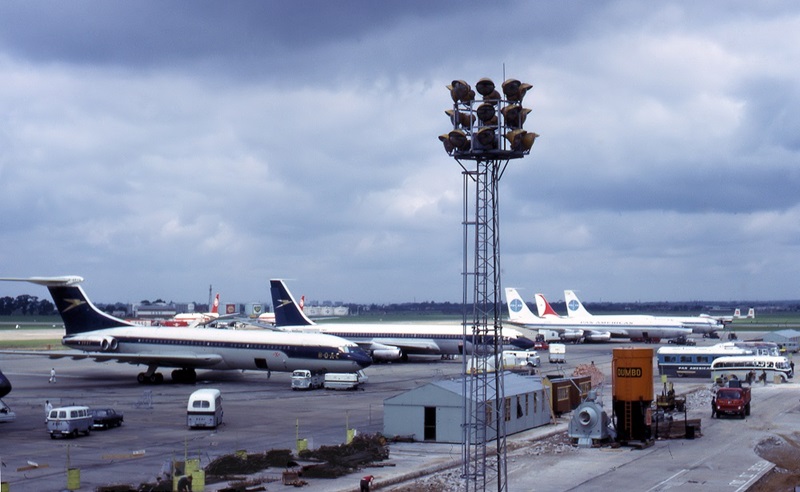
The Vickers VC10 emerged during a period of rapid change in long‑haul aviation. B.O.A.C.’s route network across Africa presented unique operational challenges, including hot‑and‑high airfields, short runways, and rough surface conditions. To meet these demands, Vickers‑Armstrongs developed an aircraft unlike any of its contemporaries. The VC10’s rear‑mounted Rolls‑Royce Conway engines, clean wing design, and full‑length leading‑edge slats provided exceptional lift and short‑field performance, while the elevated engine position reduced the risk of foreign object ingestion from debris‑strewn runways.
The aircraft’s distinctive T‑tail and swept wing contributed to strong aerodynamic efficiency, allowing the VC10 to cruise comfortably at high altitude. Passengers quickly recognised the benefits of its rear‑mounted engines, which left most of the noise behind the cabin. B.O.A.C. capitalised on this advantage with the slogan “Try a little VC‑Tenderness”, highlighting the aircraft’s quiet and refined travel experience.
The VC10 entered service with B.O.A.C. in 1964 and soon became a favourite on long‑haul routes, particularly those linking the United Kingdom with Africa and the Middle East. Despite its excellent performance, the VC10’s design was highly tailored to B.O.A.C.’s needs. Competing aircraft such as the Boeing 707 and Douglas DC‑8 encouraged major airports to upgrade their runways, reducing the VC10’s advantage and limiting its wider commercial appeal.
Several African carriers recognised the aircraft’s strengths and adopted it into their fleets. East African Airways, Ghana Airways, and Air Malawi operated the VC10 on routes where its short‑field capability and resilience in challenging climates were invaluable. British United Airways and later British Caledonian also flew the type, further broadening its operational footprint.
Beyond commercial service, the VC10 found a long and successful second life with the Royal Air Force. The RAF operated the aircraft in transport roles before converting several airframes into air‑to‑air refuelling tankers. Variants such as the C.1, C.1K, K.2, K.3 and K.4 extended the aircraft’s operational relevance for decades. The VC10 remained in RAF service until 2013, closing an extraordinary chapter in British aviation history.
Specifications.
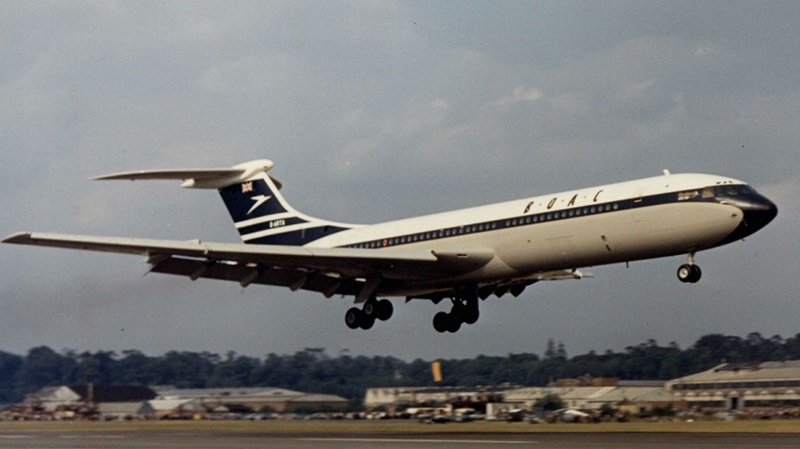
The Vickers VC10 was engineered to meet B.O.A.C.’s demanding operational requirements, combining strong hot‑and‑high performance with excellent short‑field capability. Its clean wing, free from engine pylons, and full‑length leading‑edge slats provided exceptional lift during take‑off and landing. Four rear‑mounted Rolls‑Royce Conway engines delivered impressive thrust while keeping cabin noise remarkably low. The VC10’s aerodynamic efficiency, quiet interior, and robust undercarriage made it ideally suited to African airfields and long‑haul routes.
The aircraft family included several variants, each tailored to specific roles. The Standard VC10 (Type 1101) formed the backbone of B.O.A.C.’s fleet, while the stretched Super VC10 (Types 1151 and 1154) increased passenger capacity and improved seat‑mile economics. The Royal Air Force operated multiple specialised versions, including the C.1 transport and later the C.1K, K.2, K.3 and K.4 tanker conversions. All variants shared the VC10’s distinctive T‑tail, swept wing, and quiet, refined cabin environment.
Vickers VC10 Specifications Table
| Type | VC10 Type 1101 | Super VC10 Type 1151 | VC10 C.1 Type 1106 |
|---|---|---|---|
| Crew | 3 | ||
| Passengers | 115–135 | 139–163 | 150 troops or 78 stretchers |
| Cabin Width (Internal) | 3.50 metres (11 ft 6 in) | ||
| Cabin Height (Internal) | 2.26 metres (7 ft 5 in) | ||
| Cabin Length (Internal) | 28.14 m (92 ft 4 in) | 32.00 m (105 ft 0 in) | 28.14 m (92 ft 4 in) |
| Cargo Hold Volume | 42.2 m³ (1,490 ft³) | 42.2 m³ (1,490 ft³) | 54.6 m³ (1,930 ft³) |
| Aircraft Length | 48.36 m (158 ft 8 in) | 48.36 m (171 ft 8 in) | 48.36 m (158 ft 8 in) |
| Tail Height | 12.04 m (39 ft 6 in) | ||
| Main Wing Span | 44.55 m (146 ft 2 in) | ||
| Main Wing Area | 264.8 m² (2,851 ft²) Type 1102/03: 272.4 m² (2,932 ft²) |
264.8 m² (2,851 ft²) | |
| Tail Plane Span | 13.36 m (43 ft 10 in) | ||
| Tail Plane Area | 59.3 m² (638 ft²) | ||
| Wheelbase | 20.09 m (65 ft 11 in) | 21.98 m (72 ft 1 in) | 20.09 m (65 ft 11 in) |
| Wheel Track | 6.53 m (21 ft 5 in) | ||
| Operating Empty Weight | 66,670 kg (146,980 lb) | 71,137 kg (156,828 lb) | – |
| Max Take‑off Weight | 141,520 kg (312,000 lb) | 151,953 kg (335,000 lb) | 150,953 kg (322,000 lb) |
| Max Zero Fuel | 85,004 kg (187,400 lb) | 97,524 kg (215,000 lb) | – |
| Max Landing Weight | 97,978 kg (216,000 lb) | 107,503 kg (237,000 lb) | 71,628 kg (235,000 lb) |
| Max Payload | 18,335 kg (40,420 lb) | 26,369 kg (58,172 lb) | 26,037 kg (57,400 lb) |
| Engines | 4 × Rolls‑Royce Conway RCo42 | 4 × Rolls‑Royce Conway RCo43 | 4 × Rolls‑Royce Conway RCo43 |
| Engine Thrust | 93.4 kN (21,000 lbf) | 100.0 kN (22,500 lbf) | 100.0 kN (22,500 lbf) |
| Speed (Max) | Mach 0.76, 504 kn, 580 mph, 933 km/h | ||
| Service Ceiling | 38,000 ft (11,582 m) Type 1102/03: 43,000 ft (13,106 m) |
38,000 ft (11,582 m) | – |
| Take‑off Run | 2,524 m (8,280 ft) | 2,667 m (8,750 ft) | 2,560 m (8,400 ft) |
| Landing Run | 1,945 m (6,380 ft) | 2,088 m (6,850 ft) | 1,981 m (6,500 ft) |
| Range (Fully Laden) | 5,850 nm (10,836 km) | 5,960 nm (11,038 km) | 6,260 nm (11,594 km) |
Assembly.
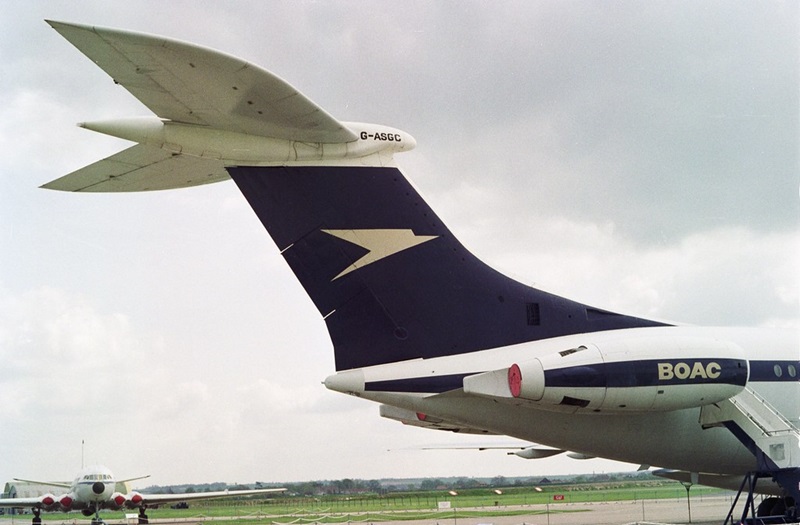
The assembly of the VC10 was a detailed and highly coordinated process that reflected the precision and craftsmanship of British engineering. Construction began with the fuselage, built from aluminium alloy sections that were carefully joined using a combination of riveting and welding techniques. Once the main fuselage structure was complete, the cockpit, tail assembly and wings were added, forming the aircraft’s distinctive profile.
With the airframe established, engineers began installing the aircraft’s hydraulic, electrical and fuel systems. Each component was fitted with meticulous attention to detail, and every system underwent rigorous testing to ensure reliability and safety. The VC10’s robust undercarriage, designed to withstand rougher African runways, was also fitted during this stage.
One of the most challenging aspects of the assembly process was the installation of the rear‑mounted Rolls‑Royce Conway engines. Each engine weighed over 6,000 pounds and required precise alignment with the fuselage. Engineers secured the engines using a series of heavy‑duty mounts and brackets, ensuring correct positioning and vibration control. Their elevated location not only contributed to the VC10’s quiet cabin but also reduced the risk of foreign object ingestion during operations from debris‑strewn runways.
After the aircraft’s systems and engines were installed, the VC10 was painted in the livery of its customer airline. Skilled workers applied the colours using a combination of spray‑painting and hand‑detailing techniques, ensuring a flawless finish. The aircraft then progressed to ground and flight testing, where engineers verified every system, control surface and performance parameter. Only after passing these exhaustive checks was the VC10 certified for service.
The result of this complex assembly process was an aircraft admired for its range, speed and passenger comfort. The VC10’s build quality and engineering excellence contributed to its long service life, both in commercial operations and later with the Royal Air Force.
Orders & Deliveries.
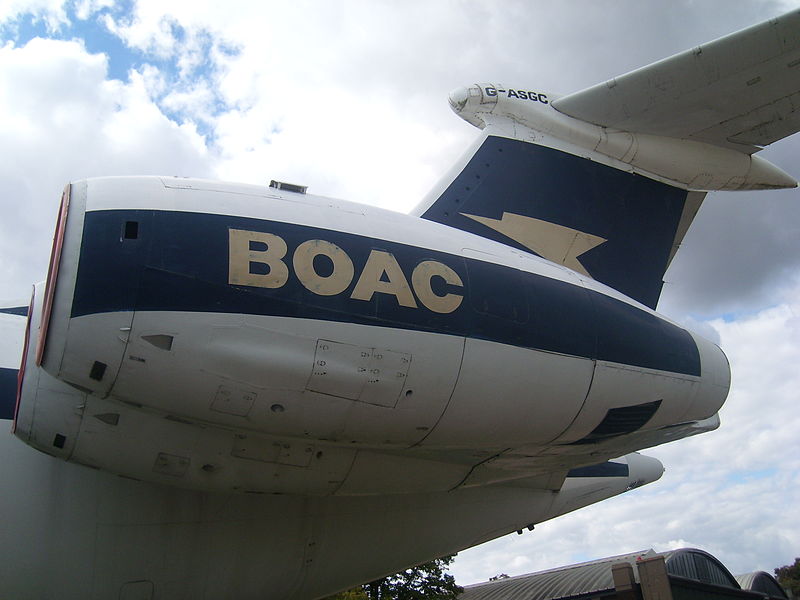
Although the VC10 was admired for its performance and passenger comfort, its order book remained limited due to the aircraft’s highly specialised design. The majority of production was driven by B.O.A.C., whose demanding African route requirements shaped the aircraft’s configuration. Only a small number of additional airlines placed orders, and several airframes were later acquired by the Royal Air Force for transport and air‑to‑air refuelling roles.
B.O.A.C. was the launch and principal customer, receiving the Standard VC10 (Type 1101) and later the stretched Super VC10 (Types 1151 and 1154). These aircraft entered service from April 1964 and remained in operation until 1975 under British Airways following the merger. Despite the limited production run, the VC10 achieved notable milestones, including setting the sub‑sonic trans‑Atlantic record of 5 hours and 1 minute.
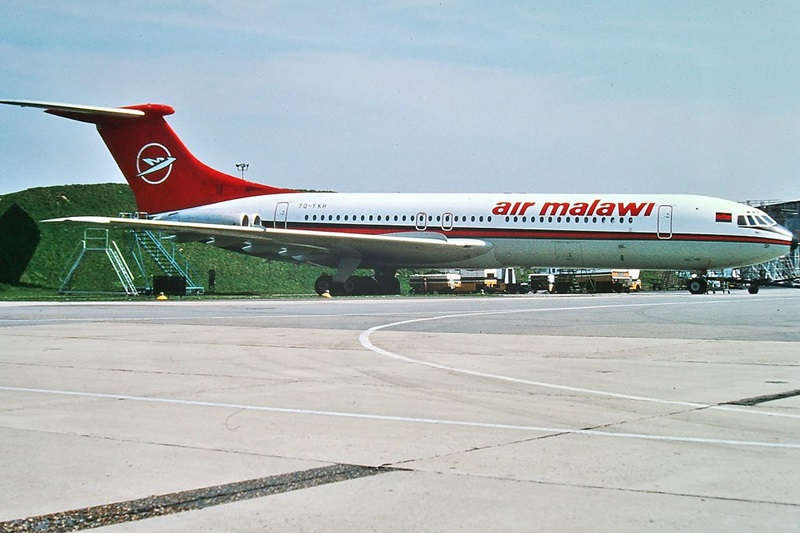
Beyond B.O.A.C., several African carriers recognised the VC10’s unique capabilities. East African Airways, Ghana Airways and Air Malawi operated the aircraft on routes where its short‑field performance and resilience in hot‑and‑high conditions were essential. British United Airways and later British Caledonian also incorporated the VC10 into their fleets, further broadening its commercial footprint.
The Royal Air Force became one of the most significant operators of the VC10 after commercial retirements began. The RAF acquired multiple airframes, converting them into transport and air‑to‑air refuelling variants including the C.1, C.1K, K.2, K.3 and K.4. These aircraft served for decades, with the final VC10s retiring from RAF service in 2013, marking the end of the type’s operational life.
Legacy.
The Vickers VC10 occupies a unique place in aviation history. Although produced in relatively small numbers, it earned a reputation far beyond its modest order book. Passengers consistently praised its quiet cabin, smooth ride and refined long‑haul comfort, while crews admired its performance from hot‑and‑high airfields and shorter runways. These qualities made the VC10 a favourite on routes where other aircraft struggled, and helped cement its status as one of Britain’s most distinctive jet airliners.
The aircraft’s technical achievements were equally significant. Its clean wing, full‑length leading‑edge slats and powerful rear‑mounted Conway engines delivered exceptional lift and strong take‑off performance. The VC10’s aerodynamic efficiency allowed it to set the sub‑sonic trans‑Atlantic record of 5 hours and 1 minute, a benchmark that still stands. Its elegant T‑tail and swept‑wing design became instantly recognisable symbols of British engineering excellence.
Beyond commercial service, the VC10’s longevity was defined by its second life with the Royal Air Force. As both a transport and air‑to‑air refuelling aircraft, the VC10 served reliably for decades, supporting operations around the world. The RAF’s C.1, C.1K, K.2, K.3 and K.4 variants extended the type’s operational relevance long after its commercial retirement, with the final aircraft leaving service in 2013. Few airliners have enjoyed such a distinguished and versatile career.
Today, the VC10 is remembered with admiration by aviation enthusiasts, former passengers and crews alike. Its combination of performance, elegance and engineering innovation ensured that it left a lasting mark on the industry. The VC10 remains a celebrated example of British aeronautical design, and its legacy continues to inspire appreciation for an era when air travel was defined by style, capability and quiet sophistication.