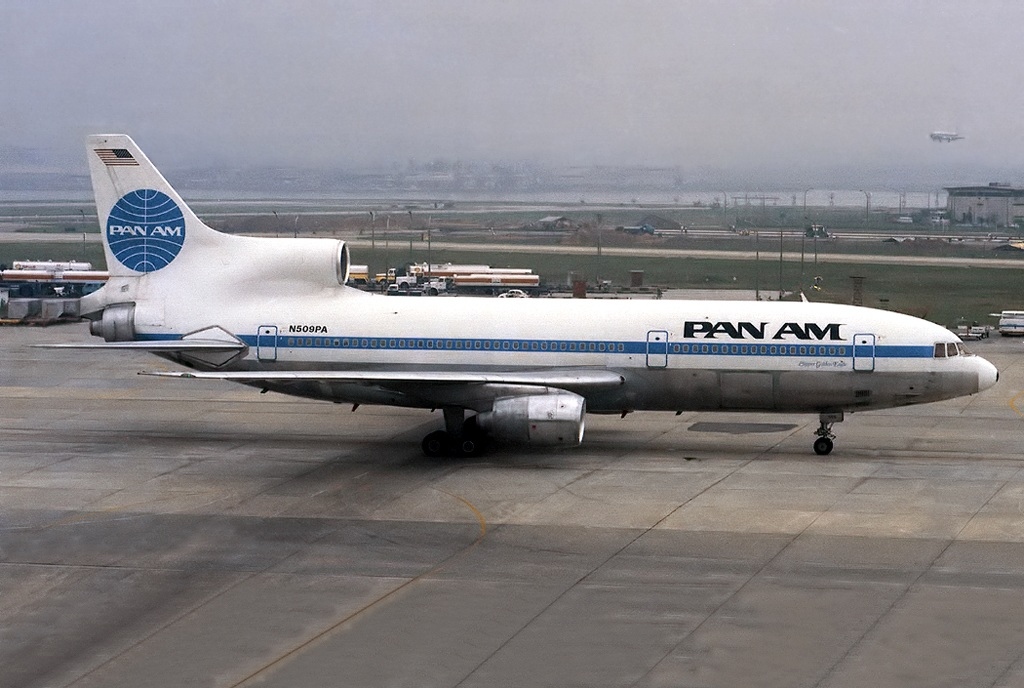
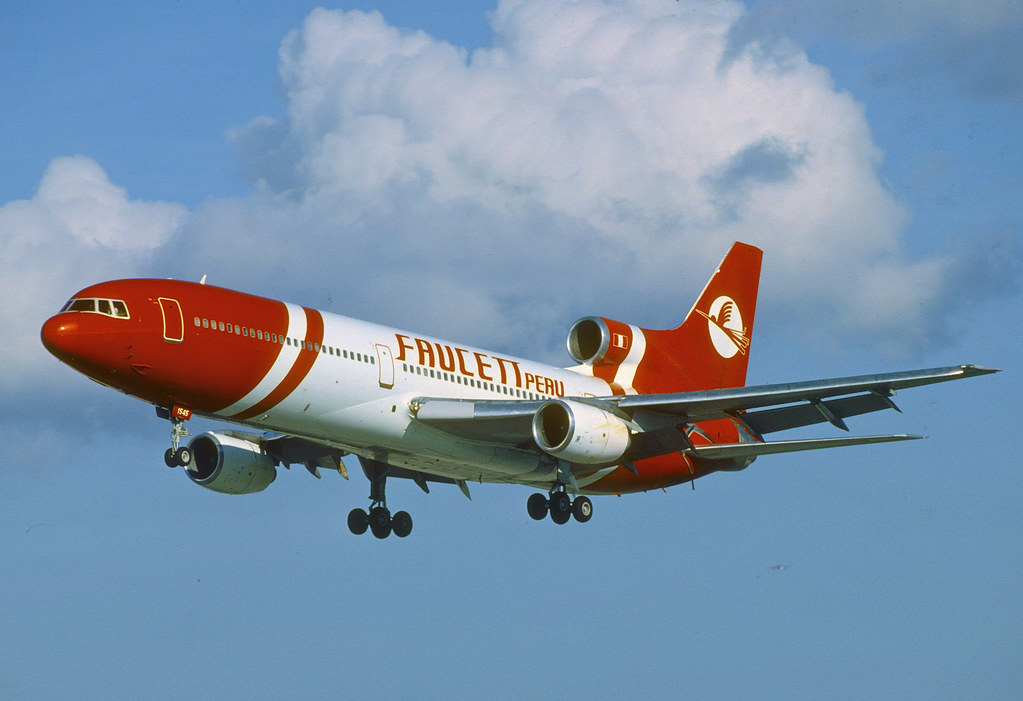
The Lockheed L‑1011 TriStar, often written as L1011 (ell‑ten‑eleven), remains the only commercial jet airliner ever produced by the Lockheed Corporation. The name “TriStar” was selected following an internal staff competition, reflecting Lockheed’s ambition to create a modern, technologically advanced widebody capable of competing directly with the McDonnell Douglas DC‑10.
Although Lockheed was well known for its military transports — including the C‑141 Starlifter and the massive C‑5 Galaxy — the company had not produced a commercial passenger aircraft since the four‑engined turboprop L‑188 Electra, which ceased production in 1961. The Electra itself went on to form the basis of the highly successful C‑130 Hercules, but Lockheed’s presence in the civil airliner market had effectively ended.
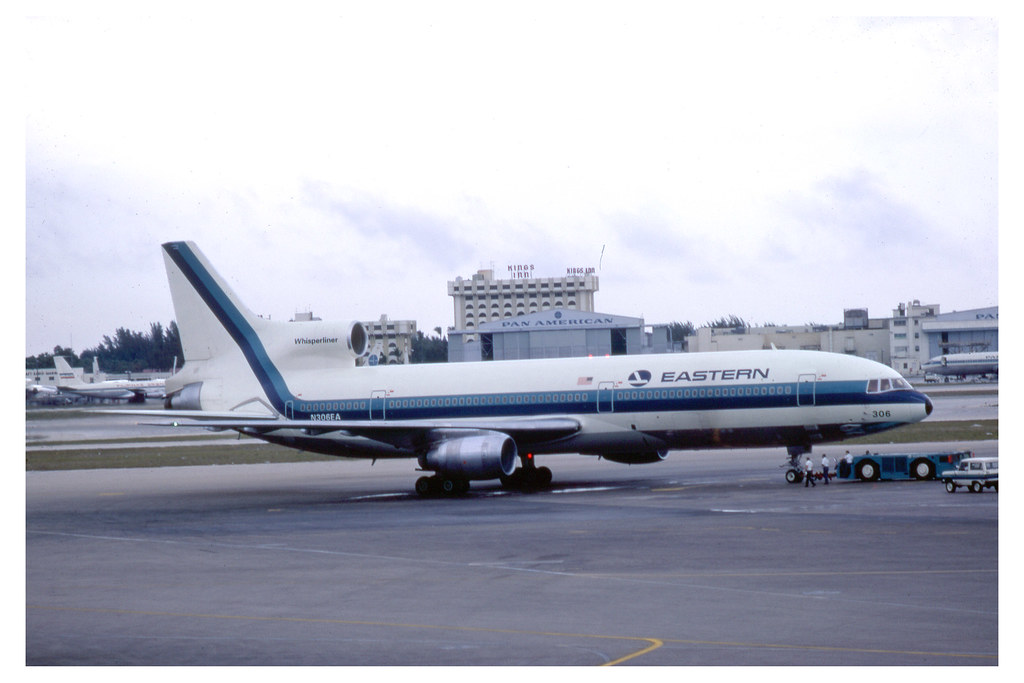
The TriStar marked Lockheed’s return to commercial aviation with a clean‑sheet design that embraced new technologies wherever possible. In contrast to McDonnell Douglas, who reused systems and design philosophies from earlier aircraft such as the DC‑8, Lockheed engineered the TriStar with advanced systems, quieter engines, and innovative structural techniques. Eastern Air Lines later marketed their TriStars as “Whisperliners”, highlighting the aircraft’s noticeably quieter operation.
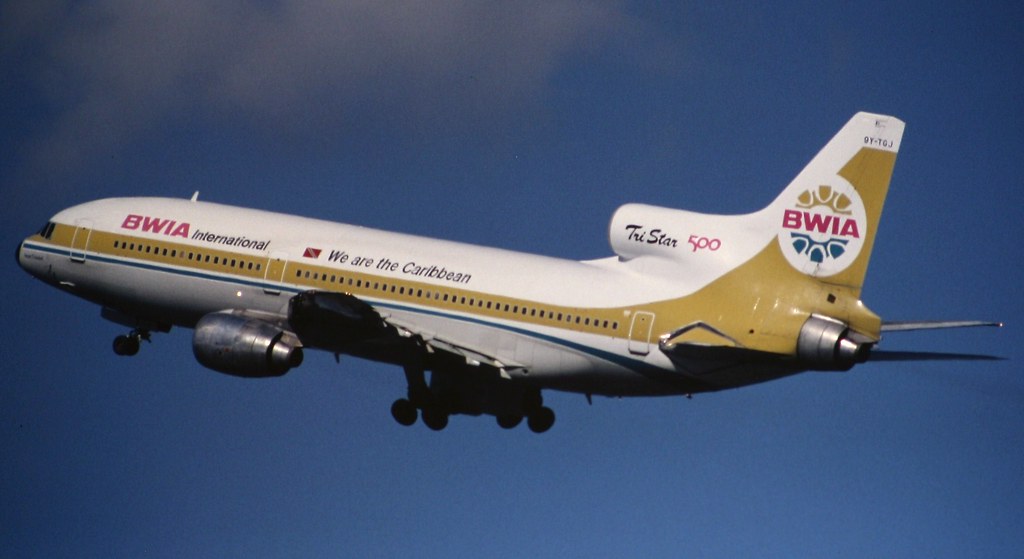
Visually, the TriStar and the DC‑10 appeared similar, both being three‑engined widebody jets. The most distinctive difference lay in the Number 2 engine. McDonnell Douglas mounted their engine above the fuselage as part of the vertical tail structure, whereas Lockheed opted for an internal fuselage mount. Air was channelled through a gentle S‑shaped intake from the top of the fuselage down to the engine, similar to the arrangement used on the Boeing 727. This avoided the weight penalties of external nacelles while maintaining efficient airflow.
The TriStar introduced several technological innovations that set it apart from its competitors. These included a Category IIIc‑rated autopilot capable of fully automatic landings in zero‑visibility conditions, Direct Lift Control for smoother approaches, and advanced bonding techniques such as Auto‑Clave, which improved fuselage corrosion resistance. These features made the TriStar one of the most sophisticated airliners of its era.

At‑a‑Glance.
Lockheed L‑1011 TriStar — At‑a‑Glance
| Category | Details |
|---|---|
| Manufacturer | Lockheed Corporation |
| Role | Widebody commercial airliner |
| First Flight | 16 November 1970 |
| Entered Service | 26 April 1972 (Eastern Air Lines) |
| Variants | L‑1011‑1, L‑1011‑200, L‑1011‑500 |
| Engines | Rolls‑Royce RB211 series |
| Passengers |
246–256 typical (variant dependent) Exit limit up to 400 (L‑1011‑1 / L‑1011‑200) |
| Range |
4,250 nmi (L‑1011‑1) 4,935 nmi (L‑1011‑200) 6,090 nmi (L‑1011‑500) |
| Total Produced | 251 aircraft (1968–1984) |
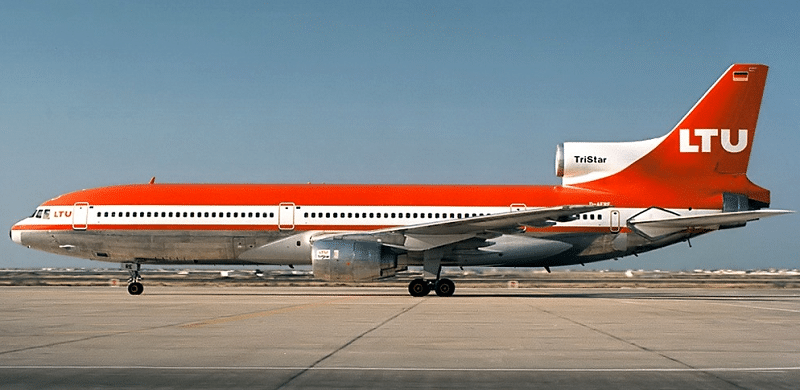
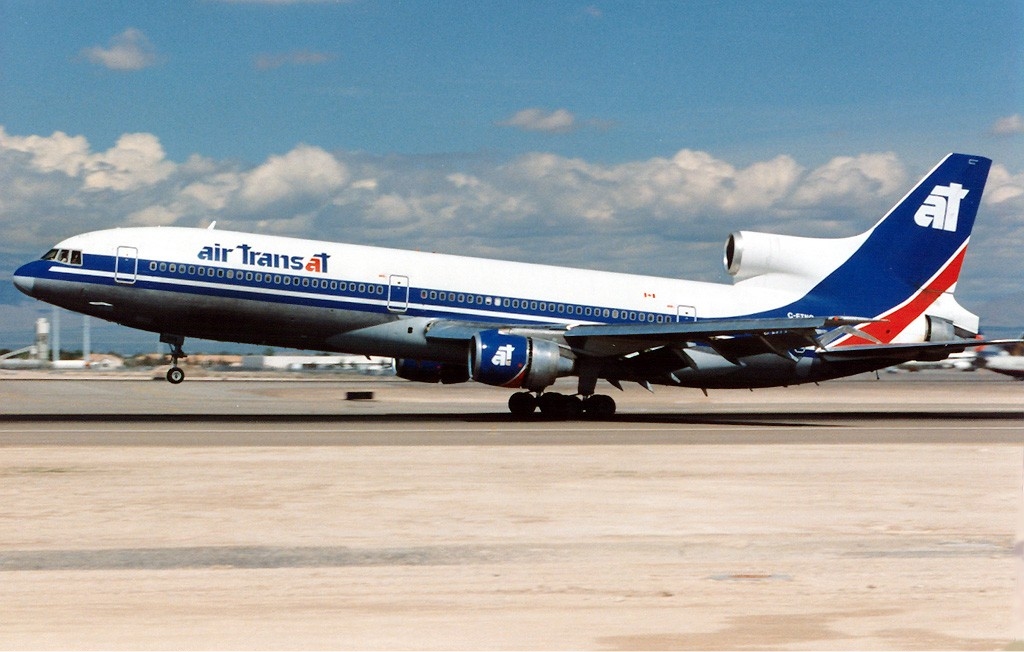
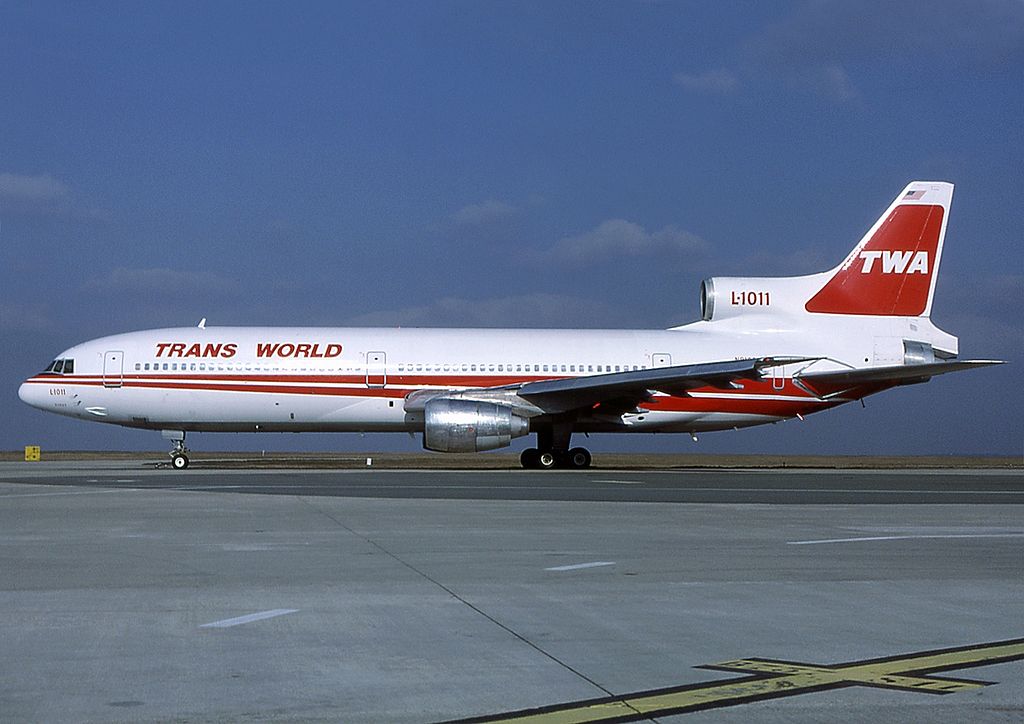
| Notable Operators | Eastern Air Lines, Saudi Arabian Airlines, British Airways, TWA, Delta Air Lines, LTU, Air Transat |
| Fun Fact | Eastern Air Lines marketed their TriStars as “Whisperliners” due to the quiet RB211 engines. |
Development Timeline.
The development of the Lockheed L‑1011 TriStar began in the late 1960s when American Airlines approached both Douglas and Lockheed seeking a new widebody jet. The requirement was for an aircraft smaller than the Boeing 747 but capable of flying intercontinental routes. Lockheed’s initial response was a large twin‑engined design, but ETOPS‑30 restrictions at the time limited twin‑engined aircraft to routes no more than 30 minutes from a diversion airfield. This made true long‑range operations impossible, leading Lockheed to adopt a three‑engined configuration.
The three‑engine layout offered several advantages. It avoided ETOPS restrictions, provided higher take‑off performance, and allowed the aircraft to operate from existing runways without requiring major airport upgrades. Lockheed’s design also incorporated advanced technologies that set the TriStar apart from its competitors.
During development, Lockheed committed to using the Rolls‑Royce RB211 engine exclusively. Although technologically superior, the RB211 programme suffered major cost overruns, pushing Rolls‑Royce into receivership. The British government stepped in with heavy subsidies to keep the engine programme alive, but required the U.S. government to guarantee Lockheed’s loans to ensure their investment was protected. This intervention kept the RB211 alive but slowed the development of more powerful variants such as the RB211‑524.
These delays had significant consequences. The TriStar’s sales campaign was pushed back by two years, and Lockheed failed to secure American Airlines as a launch customer. American ultimately chose the McDonnell Douglas DC‑10, a decision that many believe was influenced by price negotiations rather than technical merit.
Despite the setbacks, the TriStar progressed through testing. The aircraft made its maiden flight on 16 November 1970 and received FAA certification on 14 April 1972. Eastern Air Lines accepted the first delivery on 26 April 1972.
In 1972, Lockheed undertook a promotional tour with famed test pilot Tony LeVier. During this tour, the TriStar completed a fully automated flight from Palmdale to Dulles in 4 hours and 13 minutes. The aircraft flew from take‑off roll to landing entirely under autopilot control, demonstrating the sophistication of its Category IIIc‑rated systems.
Lockheed produced the TriStar in two fuselage lengths: the original L‑1011‑1 and the shorter long‑range L‑1011‑500. When the RB211‑524 engine finally became available, Lockheed offered higher‑gross‑weight versions of the L‑1011‑1 and upgrade kits for existing aircraft.
Production ran from 1968 to 1984, with 250 TriStars built — far short of the 500 units Lockheed needed to break even. The limited market, combined with engine delays and strong competition from the DC‑10, ultimately led Lockheed to withdraw from the commercial airliner business.
History.
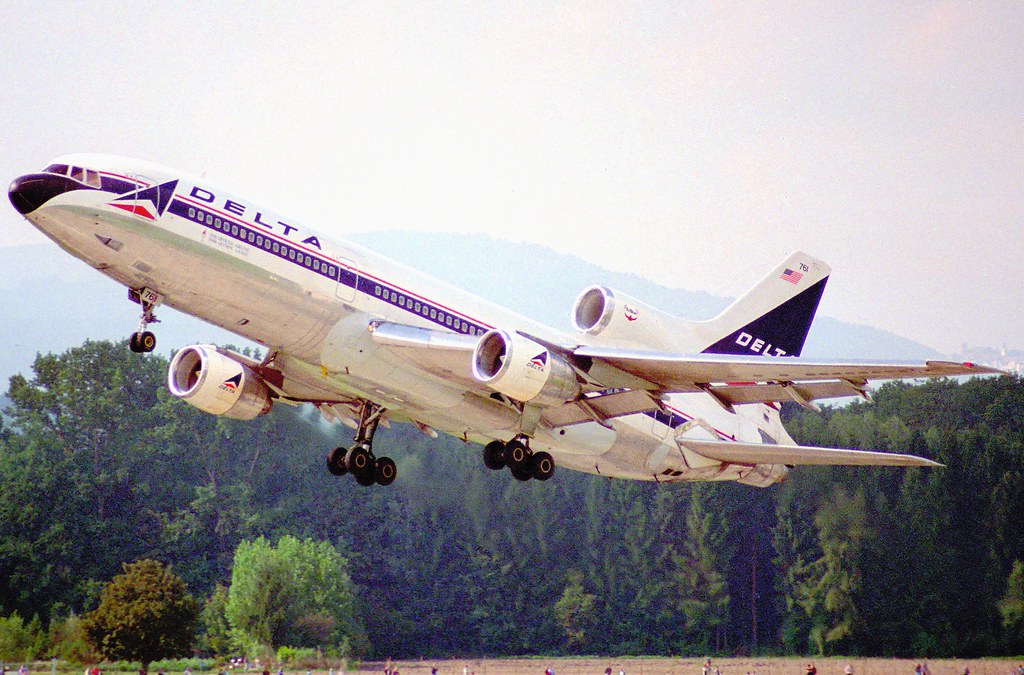
The Lockheed L‑1011 TriStar entered service during one of the most competitive eras in widebody aviation. Although technologically advanced, the TriStar faced significant commercial challenges from the outset. Lockheed’s insistence on using the Rolls‑Royce RB211 engine exclusively created a dependency that would shape the aircraft’s entire history.
The RB211 was an innovative design, but its development costs spiralled out of control. Rolls‑Royce entered receivership, forcing the British government to intervene with substantial financial support. To protect this investment, the British government required the United States government to guarantee Lockheed’s loans, ensuring the TriStar programme could continue. While this saved the RB211, it slowed the development of more powerful variants and delayed the TriStar’s entry into the market.
These delays proved costly. Lockheed lost American Airlines as a potential launch customer, with the airline ultimately choosing the McDonnell Douglas DC‑10. Many industry observers believed American used Lockheed’s proposal to negotiate a better price from McDonnell Douglas. With American Airlines gone, Lockheed’s sales momentum weakened at a critical moment.
Despite the setbacks, the TriStar was widely regarded as one of the most comfortable and reliable airliners of its time. Eastern Air Lines marketed their fleet as “Whisperliners”, highlighting the quiet operation of the RB211 engines. Passengers appreciated the smooth ride, spacious cabin, and advanced systems that made the TriStar feel ahead of its competitors.
The TriStar’s technological sophistication was both a strength and a weakness. Airlines admired its performance, but the aircraft’s higher price and limited engine options made it less flexible than the DC‑10. McDonnell Douglas offered multiple engine choices and lower acquisition costs, giving the DC‑10 a commercial advantage even as it faced its own safety controversies.
Lockheed produced the TriStar in two fuselage lengths: the original L‑1011‑1 and the shorter, long‑range L‑1011‑500. When the RB211‑524 engine finally became available, Lockheed introduced higher‑gross‑weight versions of the L‑1011‑1 and offered upgrade kits for existing aircraft. These improvements helped extend the TriStar’s operational life, but they arrived too late to change the aircraft’s overall market trajectory.
Between 1968 and 1984, Lockheed built 250 TriStars — only half of the 500 units required to break even. The combination of engine delays, strong competition from the DC‑10, and a limited market for three‑engined widebodies ultimately led Lockheed to withdraw from commercial aircraft manufacturing. The TriStar became both a technological triumph and a commercial cautionary tale.
Specifications.
| L‑1011‑1 | L‑1011‑200 | L‑1011‑500 | |
|---|---|---|---|
| Flight Crew | 3 | ||
| Prices | US$20M (1972) | – | US$200M (today) |
| Milestones | |||
| Maiden Flight | 16 Nov 1970 | Late 1976 | 16 Oct 1978 |
| Launch Delivery | 26 Apr 1972 | 28 May 1977 | 27 Apr 1979 |
| Launch Airline | Eastern Air Lines | Saudi Arabian Airlines | British Airways |
| Final Delivery | 07 Mar 1983 | 04 Nov 1981 | 03 Oct 1983 |
| Total Produced (251) | 157 | 44 | 50 |
| Power Plant | |||
| Manufacturer | Rolls‑Royce | ||
| Type | RB211‑22 | RB211‑524B | |
| Thrust | 187 kN (42,000 lbf) | 222 kN (50,000 lbf) | |
| Dimensions | |||
| Fuselage | |||
| Aircraft Length | 54.17 m (177 ft 8.5 in) | 50.05 m (164 ft 2.5 in) | |
| Height | 16.87 m (55 ft 4 in) | ||
| Fuselage Width (Outside) | 5.97 m (19 ft 7 in) | ||
| Cabin Width (Interior) | 5.77 m (18 ft 11 in) | ||
| Wing | |||
| Span | 47.35 m (155 ft 4 in) | 50.09 m (164 ft 4 in) | |
| Wing Area | 321.1 m² (3,456 ft²) | 329.0 m² (3,541 ft²) | |
| L‑1011‑1 | L‑1011‑200 | L‑1011‑500 | |
| Under Carriage | |||
| Number of Nose Wheels | 2 | ||
| Number of Main Wheels | 8 (2×4) | ||
| Cabin | |||
| Typical Seating (Mixed Class) | 256 | 246 | |
| Exit Limit | 400 | 330 | |
| Seats Abreast (Typical) | First Class 6 (2‑2‑2), Economy Class 8 (2‑4‑2) | ||
| Weights | |||
| Max Take‑off Weight (MTOW) | 200,000 kg (430,000 lb) | 211,374 kg (466,000 lb) | 231,332 kg (510,000 lb) |
| Operating Empty Weight (OEW) | 110,000 kg (241,700 lb) | 113,000 kg (248,400 lb) | 111,000 kg (245,400 lb) |
| Fuel | |||
| Fuel Capacity | 90,150 L (23,814 US gal) | 100,320 L (26,502 US gal) | 119,780 L (31,642 US gal) |
| Speeds | |||
| Mmo (Maximum Operating Speed) | Mach 0.90 / 516 kn / 956 kph | ||
| Cruise Speed | 520 kn (963 kph) | 515 kn (954 kph) | 525 kn (972 kph) |
| Stall Speed | 108 kn (200 kph) | 110 kn (204 kph) | 114 kn (211 kph) |
| Ceiling | 12,800 m (42,000 ft) | 13,100 m (43,000 ft) | |
| Range | 4,250 nmi (7,871 km) | 4,935 nmi (9,140 km) | 6,090 nmi (11,279 km) |
Assembly.
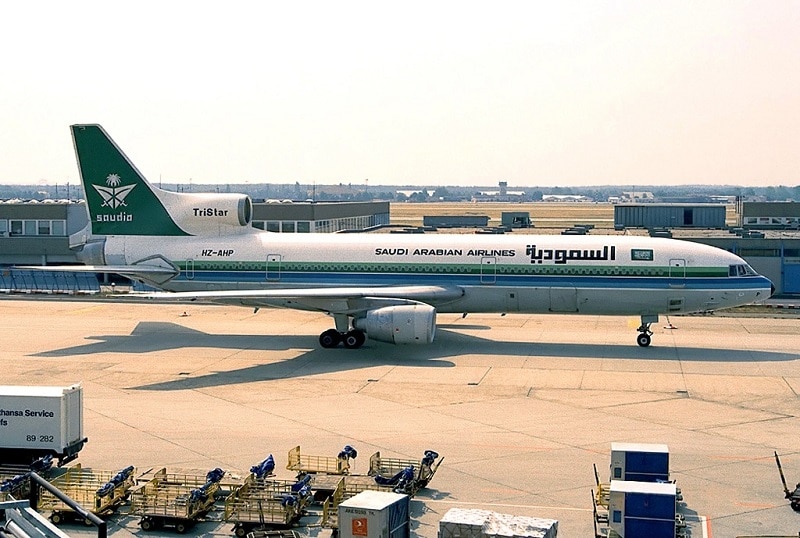
The Lockheed L‑1011 TriStar was assembled at Lockheed’s Palmdale facility in California, a site already well known for producing large military transports such as the C‑141 Starlifter and the C‑5 Galaxy. The TriStar programme required significant upgrades to the plant, including new tooling, expanded hangar space, and specialised equipment to support the aircraft’s advanced systems and large composite structures.
Lockheed produced the TriStar in two fuselage lengths: the original L‑1011‑1 and the shorter, long‑range L‑1011‑500. The assembly line was configured to accommodate both versions, with modular sections allowing the fuselage, wing, and tail components to be adapted depending on the variant being built. This flexibility helped streamline production, although the overall output remained limited due to engine delays and market pressures.
One of the most distinctive aspects of TriStar assembly was the installation of the Number 2 engine. Unlike the McDonnell Douglas DC‑10, which mounted its centre engine externally above the fuselage, Lockheed designed an internal S‑duct system that channelled air from an intake on top of the fuselage down to the engine housed within the tail cone. This required precise alignment and careful structural integration during assembly to ensure smooth airflow and maintain the aircraft’s performance advantages.
The TriStar also incorporated several advanced manufacturing techniques. The Auto‑Clave bonding process, used for fuselage panels, improved corrosion resistance and structural integrity. Direct Lift Control (DLC) components, advanced autopilot systems, and the RB211 engine integration demanded a high level of precision and coordination across multiple assembly teams.
When the more powerful RB211‑524 engine became available, Lockheed introduced high‑gross‑weight versions of the L‑1011‑1. Upgrade kits were offered to operators, allowing existing aircraft to be modified with strengthened structures and updated systems. These upgrades were typically carried out at Palmdale or at major airline maintenance bases with Lockheed oversight.
TriStar production ran from 1968 to 1984. Although the assembly process was efficient and the aircraft was highly regarded for its build quality, Lockheed ultimately produced only 250 units — far short of the 500 required to break even. The Palmdale line was eventually closed, marking the end of Lockheed’s commercial airliner manufacturing.
Orders & Deliveries.
The Lockheed L‑1011 TriStar entered a highly competitive widebody market dominated by the Boeing 747 and the McDonnell Douglas DC‑10. Although the TriStar was widely regarded as the most technologically advanced of the three, its commercial prospects were hampered by delays in the Rolls‑Royce RB211 engine programme. These delays pushed the TriStar’s entry into service back by two years, allowing the DC‑10 to secure key early customers.
Lockheed’s insistence on offering only one engine option — the RB211 — further limited the aircraft’s appeal. McDonnell Douglas, by contrast, offered multiple engine choices for the DC‑10, giving airlines greater flexibility in fleet planning and maintenance. As a result, several carriers that initially considered the TriStar ultimately chose the DC‑10.
Despite these challenges, the TriStar did achieve notable sales. Eastern Air Lines became the launch customer, taking delivery of the first L‑1011‑1 on 26 April 1972. Saudi Arabian Airlines launched the long‑range L‑1011‑200, while British Airways introduced the shorter‑fuselage L‑1011‑500. Other major operators included TWA, Delta Air Lines, Air Canada, Cathay Pacific, LTU, and Air Transat.
Lockheed produced the TriStar in three main variants: the L‑1011‑1, L‑1011‑200, and L‑1011‑500. Production totals were 157 for the L‑1011‑1, 44 for the L‑1011‑200, and 50 for the L‑1011‑500, bringing total output to 251 aircraft. This fell well short of the 500 units Lockheed required to break even on the programme.
The TriStar’s advanced technology, quiet operation, and strong safety record made it popular with passengers and crews, but the combination of engine delays, limited engine choice, and strong competition from the DC‑10 ultimately constrained its commercial success. Deliveries continued until 1984, after which Lockheed withdrew from the commercial airliner market entirely.
Legacy.
The Lockheed L‑1011 TriStar occupies a unique place in commercial aviation history. Although it never achieved the sales success Lockheed hoped for, the aircraft became widely respected for its engineering quality, passenger comfort, and operational reliability. Many pilots and engineers considered the TriStar one of the most technically refined widebodies of its era.
Its advanced systems, including Category IIIc‑rated autoland capability and Direct Lift Control, set new benchmarks for automation and handling. These innovations influenced later aircraft designs and helped establish expectations for widebody performance and flight deck sophistication. Even airlines that operated only small TriStar fleets often praised the aircraft for its smooth flying characteristics and dependable service record.
The TriStar also demonstrated the risks of relying on a single supplier for critical components. The Rolls‑Royce RB211 delays became a case study in how engine development can shape the fate of an entire aircraft programme. While the RB211 ultimately proved to be an excellent engine, the financial and timing pressures it created had lasting consequences for Lockheed’s commercial ambitions.
In service, the TriStar earned a reputation for safety and comfort. Passengers appreciated its quiet cabin, and crews valued its predictable handling and robust systems. Many aircraft continued flying long after production ended, particularly with leisure and charter operators who valued its reliability and long‑range capability.
Commercially, the TriStar’s limited market penetration contributed to Lockheed’s withdrawal from the airliner business. Yet its legacy is not one of failure, but of technical achievement. The TriStar showed what could be accomplished when an aircraft was designed with engineering excellence as the priority, even if market conditions ultimately worked against it.
Today, the TriStar is remembered as a beautifully engineered widebody that arrived at a difficult moment in aviation history. It remains admired by enthusiasts, pilots, and engineers alike — a testament to Lockheed’s ability to build a world‑class airliner, even if it was their last.