
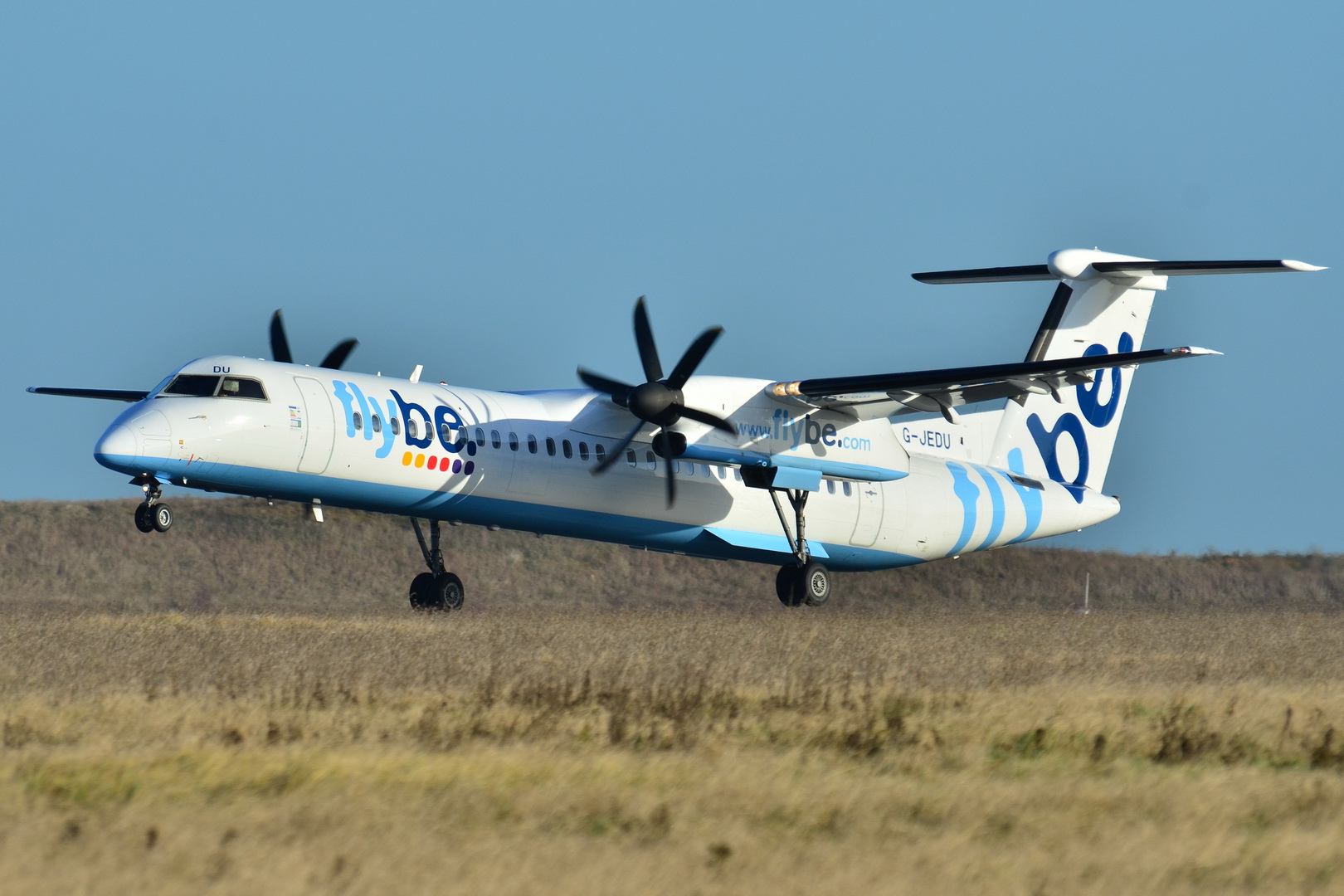
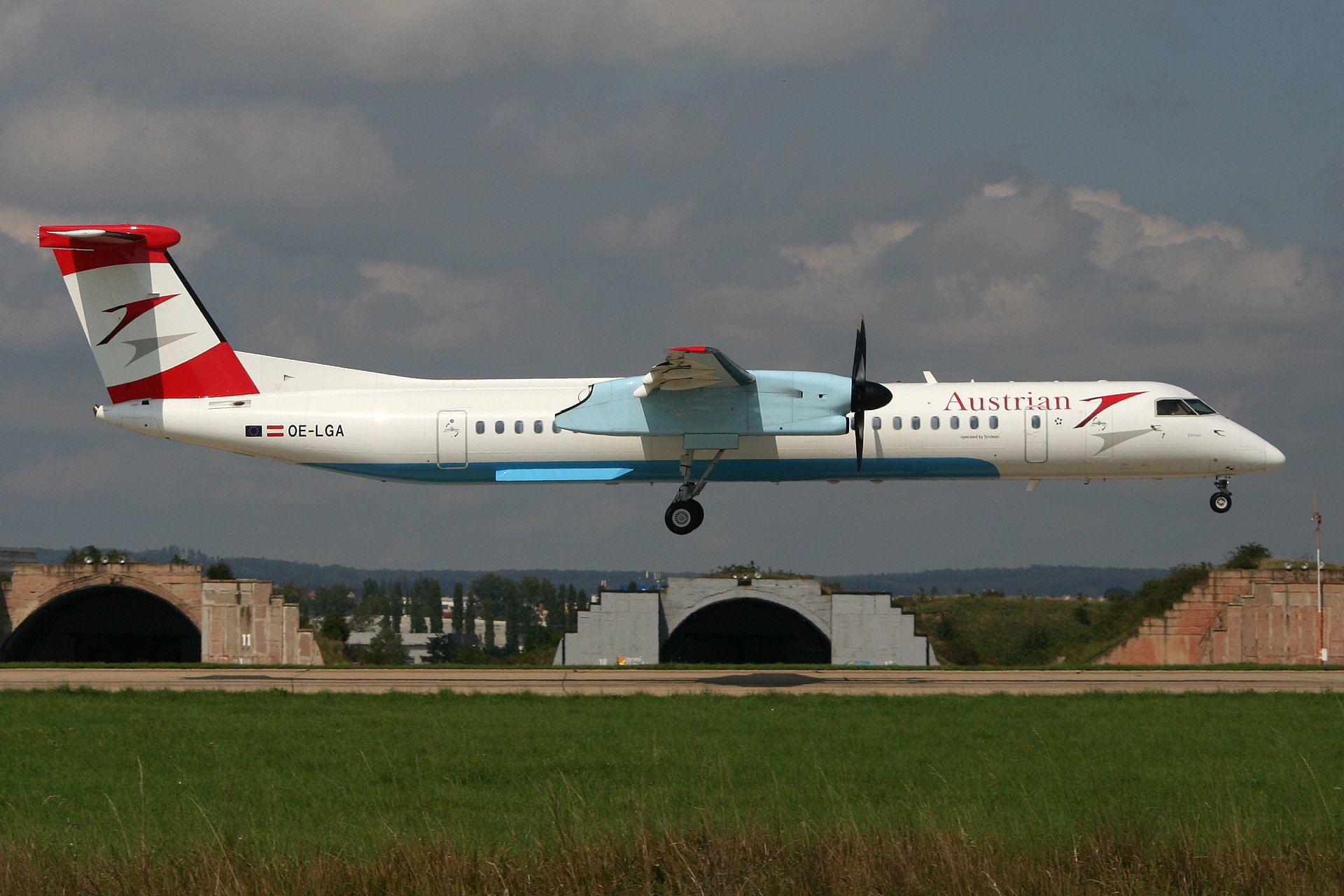
The de Havilland Canada / Bombardier Dash 8 is a high‑wing, twin‑engined turboprop regional airliner introduced in 1984 as the successor to the four‑engined Dash 7. While the Dash 7 excelled in short‑field performance, airlines increasingly prioritised operating economy over extreme STOL capability. This shift in market demand led de Havilland Canada to develop the Dash 8 — a lighter, more efficient, two‑engine aircraft with improved cruise performance.
The Dash 8 retained elements of the Dash 7’s fuselage and tail design but introduced a more streamlined nose and long, aerodynamic engine nacelles. The landing gear retracts into the rear section of each nacelle, and the aircraft’s large T‑tail keeps the horizontal stabiliser clear of propeller wash during take‑off.
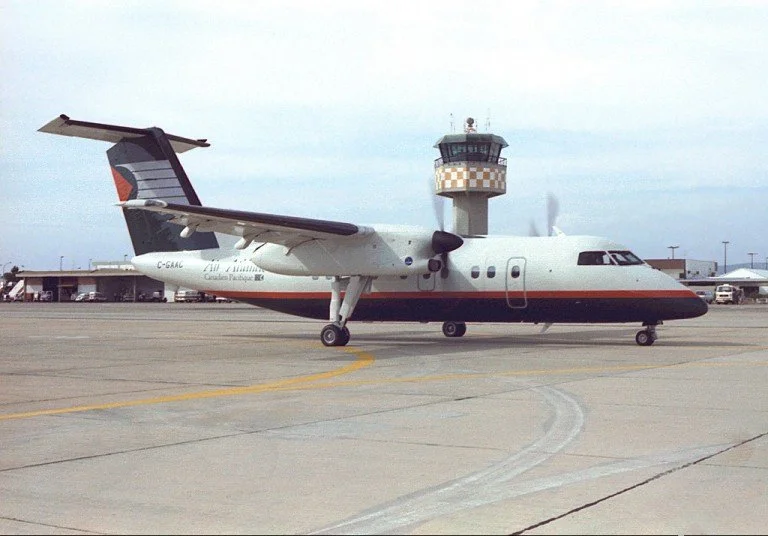

At a Glance.
| Manufacturer | de Havilland Canada / Bombardier Aerospace |
| First Flight | 20 June 1983 |
| Introduction | 23 October 1984 (NorOntair) |
| Status | Production paused (2021), restart planned |
| Number Built | 1,318 (all variants) |
| Variants | Dash 8‑100, ‑200, ‑300, ‑400 (Q400) |
| Engines | Pratt & Whitney Canada PW120 / PW123 / PW150 series |
| Typical Seating | 37–78 passengers |
| Range | Up to 1,362 nm (Dash 8‑400) |
| Cruise Speed | 360 knots (Dash 8‑400) |
With only two engines and excellent fuel efficiency, the Dash 8 quickly became one of the most economical regional airliners of its era. At introduction, it was the most fuel‑efficient regional airliner in the world.
Specifications
de Havilland Canada / Bombardier Dash 8 Specs Table
| Dash 8-100 | Dash 8-200 | Dash 8-300 | Dash 8-400 | |
|---|---|---|---|---|
| Flight Crew | 2 | |||
| Typical 1 Class Seating | 37 | 37 | 50 | 78 |
| Year Entered Service | 1984 | 1995 | 1989 | 2000 |
| Airframe Cost (USD) | M$12.5 | M$13 | M$17 | M$27 |
| Airframe Dimensions | ||||
| Length | 22.25 mtrs (73 ft) | 25.68 mtrs (84 ft 3 in) | 32.81 mtrs (107 ft 8 in) | |
| Tail Height | 7.49 mtrs (24 ft 7 in) | 8.3 mtrs (27 ft 3 in) | ||
| Fuselage Diameter | 2.69 mtrs (8 ft 10 in) | |||
| Cabin Width | 2.51 mtrs (8 ft 3 in) | |||
| Cabin Length | 9.1 mtrs (29 ft 10 in) | 12.6 mtrs (41 ft 4 in) | 18.8 mtrs (61 ft 8 in) | |
| Wing Span | 25.89 mtrs (84 ft 11 in) | 27.43 mtrs (90 ft) | 28.4 mtrs (93 ft 2 in) | |
| Wing Area | 54.4 mtrs²(585.55 ft²) | 56.2 mtrs² (604.93 ft²) | 63.1 mtrs² (679.20 ft²) | |
| Performance | ||||
| Engines | 2 x PW120A/PW121 | 2 x PW123C/D | 2 x PW123B | 2 x PW150A |
| Normal Cruise Speed | 269 knots (310 mph 500 km/h) | 290 knots (334 mph 537 km/h) | 285 knots (328 mph 528 km/h) | 360 knots (414 mph 667 km/h) |
| Maximum Operating Altitude | 25,000 ft (7,620 mtrs) | 27,000 ft (8,230 mtrs) | ||
| Range (typical load) | 1,020 nautical miles (1,174 statute miles / 1,889 km) | 925 nautical miles (1,065 statute miles / 1,713 km) | 841 nautical miles (968 statute miles / 1,558 km) Long Range Tanks 1,264 miles (2,034 km) |
1,362 nautical miles (1,567 statute miles / 2,522 km) |
| Takeoff Distance at MTOW | 800 mtrs (2,625 ft) | 1,178 mtr (3,865 ft) | 1,402 mtrs (4,600 ft) | |
| Parameters | ||||
| Maximum Fuel Capacity | 3,210 Ltr (848 US gal) | 6,616 Ltr (1,748 US gal) |
||
| Maximum Takeoff Weight | 16,470 kg (36,300 lb) | 19,500 kg (43,000 lb) |
29,260 kg (64,500 lb) | |
| Maximum Landing Weight | 15,650 kg (34,500 lb) | 19,050 kg (42,000 lb) |
28,010 kg (61,750 lb) | |
| Maximum Zero Fuel Weight | 14,700 kg (32,400 lb) | 17,920 kg (39,500 lb) |
25,850 kg (57,000 lb) | |
| Typical Empty Operating Weight | 10,483 kg (23,111 lb) | 11,791 kg (25,995 lb) |
17,185 kg (37,886 lb) | |
| Typical Payload Weight | 3,407 kg (7,511 lb) | 5,138 kg (11,327 lb) | 8,670 kg (19,114 lb) | |
History
The Dash 8 entered service at a time when older turboprops such as the Fokker F27 Friendship and Handley Page Herald were reaching the end of their operational lives. Its similar airframe proportions made it a natural upgrade path for airlines replacing these aging types.
Originally built by de Havilland Canada in Downsview, Toronto, the company was acquired by Boeing in 1988. After Boeing lost a major Air Canada contract to Airbus, de Havilland was sold to Bombardier Aerospace in 1992. Under Bombardier, the aircraft became known as the Dash 8 Q‑Series.
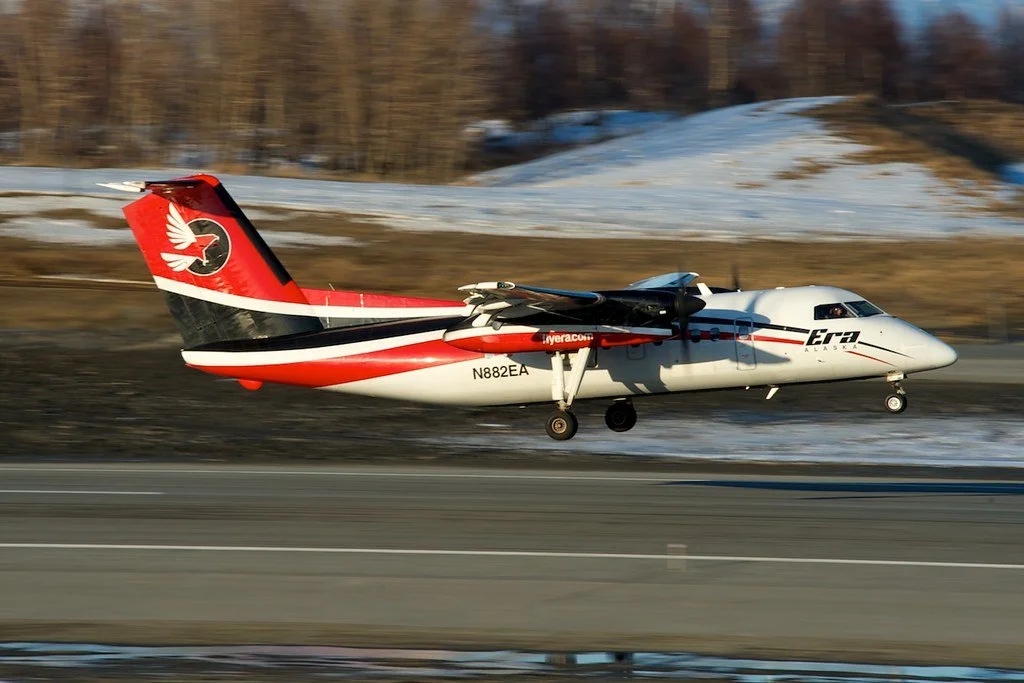
Four major variants were produced: the Dash 8‑100, ‑200, ‑300, and the stretched ‑400 (Q400). The 100 and 200 shared the same fuselage length, with the 200 offering more powerful engines. The 300 added over three metres of fuselage length and optional long‑range tanks.
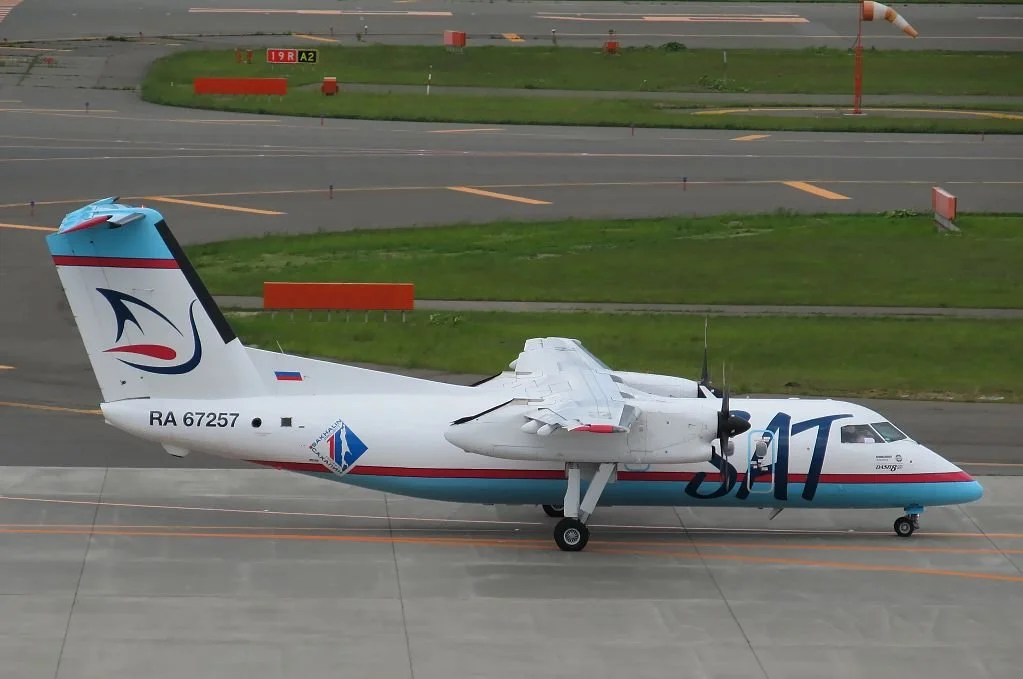
The Dash 8‑400 (Q400) became the flagship model, offering significantly higher cruise speeds and excellent seat‑mile economics — often outperforming regional jets on short sectors where taxi time reduces the advantage of higher jet speeds.
From 1996 onward, the 200, 300, and 400 variants were fitted with ANVS (Active Noise and Vibration Suppression), giving rise to the “Q” (Quiet) designation.

Bombardier explored a stretched 90‑seat Q400X, but sales lagged behind the cheaper ATR 72. In 2018, the Dash 8 program and de Havilland Canada brand were sold to Longview Aviation Capital, reviving the DHC name.
Production was paused in 2021 due to low demand and the closure of the Downsview facility. De Havilland Canada intends to restart production at a new site when market conditions improve.
| Date | Event |
|---|---|
| 19 April 1983 | The first de Haviland Canada, DHC Dash 8 rolls out of the factory. |
| 20 June 1983 | First flight of the DHC Dash 8. |
| 23 October 1984 | Now defunct airline, NorOntair becomes the first operator of the DHC Dash 8. |
| 1986 | Boeing buys de Havilland Canada in a bid to compete with Airbus on a lucrative |
| March 1992 | As soon as Boeing lost the Air Canada contract to Airbus, they put de Havilland Canada up for sale. DHC was bought by Montreal-based Bombardier Aerospace. |
| Q2 1996 | All Dash 8s, the 200, 300 and 400 are fitted with ANVS (Active Noise and Vibration Suppression) from this date onward. The Q for Quiet is added to the model numbers, eg Q400. |
| 2005 | The last Dash 8 100 is produced. |
| 2007 | Bombardier proposes to stretch the Q400 to a 90 seat version called the 400X. |
| April 2008 | Bombardier announces that the Dash 8 100, 200 and 300, the Classic Series, will no longer be produced. |
| June 2009 | Air Nelson (New Zealand) is the last airline to receive a Classic Series Dash 8. |
| May 2009 | Ther last Dash 8 200 and 300 are produced. |
| June 2009 | Bombardier announced that the 400X was still very much part of the future and slated a 2013-14 date target for its introduction. Not much other detail was given. |
| July 2010 | Bombardier announced they were still in discussion with potential customers about eh 400X, but the commitment to this project seemed less. |
| May 2011 | Bombardier is committed to the 400X project, however, new engines from General Electric and Pratt and Whitney were complicating launch dates. The expected launch date had slipped to 2015. |
| October 2012 | Bombardier together with a consortium including Korea Aerospace Industries and Korean Air Lines sign a deal to develop the 90 seat version with a target of 2019 for launch. |
| February 2016 | Bombardier announce at the Singapore Airshow a 90 seat version of the Dash 8 to be launched in 2018. |
| 08 November 2018 | Longview Aviation Capital Corporation buy the entire Dash 8 program and resurrected the de Havilland Canada(DHC) brand. |
| 17 February 2021 | de Havilland Canada(DHC) announced a pause in production planned for the second half of 2021. |

Orders and Deliveries
The Dash 8 family has enjoyed strong global adoption across four decades, with more than 1,300 aircraft delivered to over 100 operators worldwide. Its combination of short‑field capability, fuel efficiency, and rugged reliability made it a natural successor to earlier turboprops such as the Fokker F27 and Handley Page Herald. Production has spanned multiple ownership eras — de Havilland Canada, Boeing, Bombardier, and now the revived de Havilland Canada brand.
Production Totals by Variant
| Variant | Production | Years Built |
|---|---|---|
| Dash 8‑100 | 299 | 1984–2005 |
| Dash 8‑200 | 114 | 1995–2009 |
| Dash 8‑300 | 235 | 1989–2009 |
| Dash 8‑400 / Q400 | 670+ | 2000–2021 (paused) |
Combined, the Dash 8 program has produced more than 1,300 aircraft, making it one of the most successful regional turboprops ever built.
Top Operators
Across its production life, the Dash 8 has been operated by a wide range of regional carriers, government agencies, and special‑mission operators. The largest fleets have been held by:
- Jazz Aviation (Canada) – the world’s largest Dash 8 operator across multiple variants
- Horizon Air (USA) – major Q400 operator
- Air Canada / Air Canada Express – extensive Dash 8‑100/300/Q400 history
- ANA Wings (Japan) – significant Q400 fleet
- SpiceJet (India) – one of the largest Q400 fleets globally
- Porter Airlines (Canada) – all‑Q400 fleet until 2023
- Qazaq Air (Kazakhstan) – modern Q400 fleet
- Air New Zealand (Air Nelson) – large Dash 8‑300/Q300 fleet
- Flybe (UK) – major Q400 operator in both its original and relaunched forms
- Croatia Airlines – long‑standing Q400 operator
In addition to commercial carriers, the Dash 8 has been widely adopted for maritime patrol, coast guard, surveillance, and government transport roles due to its endurance and low operating cost.
Program Status
Production of the Dash 8‑400 was paused in 2021 following reduced demand during the pandemic and the closure of the Downsview facility. De Havilland Canada has stated its intention to restart production at a new site once market conditions improve. The company is also studying future variants, including a potential 50‑seat shrink to replace aging regional jets such as the CRJ200 and ERJ‑145.
Despite the pause, the Dash 8 remains in active service worldwide, with strong aftermarket support and continued demand for both passenger and special‑mission roles.